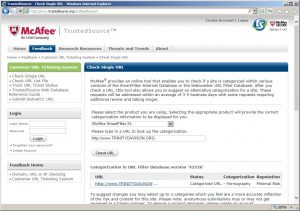
What do the Trinity Davison Lutheran Church, the Filipino American Women’s Network, the Tucson Jazz Institute, the Sacramento Police Activities League, the Pan Iranist Party of Iran, and the Salvation Army of Houston, Texas have in common?
Their websites are all blocked for Internet users in Saudi Arabia, and for most Internet users in the United Arab Emirates
Cyber Steward Network partner Walid Al-Saqaf writes about the recent launch of Yemen’s chapter of the Internet Society for Global Voices Advocacy.
Citizen Lab Director Ron Deibert’s book, Black Code: Inside the Battle for Cyberspace, made the long list for the 2014 British Colombia National Non-Fiction award.
The Collaboration on International ICT Policy in East and Southern Africa (CIPESA) and Paradigm Initiative Nigeria (PIN) to co-host discussion on online safety matters in Africa, during November and December 2013.
This post is an introduction to Asia Chats, a research project analyzing information controls and privacy in mobile messaging applications used in Asia. The project will produce a series of reports that will begin with a focus on WeChat, LINE, and KakaoTalk. Reports will include analysis based on our technical investigation of censorship or surveillance functionality, assessment of privacy issues surrounding these applications’ use and storage of user data, and comparison of the terms of service and privacy policies of the applications.
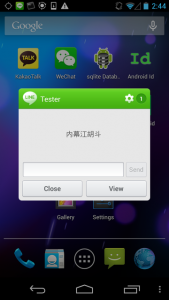
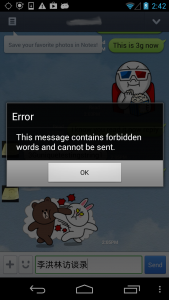
This report by Seth Hardy (Senior Security Analyst, Citizen Lab) describes the technical details of client-side censorship functionality in the LINE messenger client for Android, and a method for disabling it.
This post is the first in a series of research reports analyzing information controls and privacy in mobile messaging applications used in Asia. An introduction to the project can be found here
This post analyzes the multistakeholder participation in the 2013 IGF in Indonesia, which has been lauded as a model for how different stakeholder groups can operate at these events, and discusses developments in the country’s Internet governance agenda.

Cyber Steward partner organization Bytes for All (B4A), based in Pakistan, joined with ARTICLE 19 to condemn a proposal developed by the government of Sindh Province for a three-month ban on instant messaging apps Skype, Viber, and WhatsApp. The provincial government maintained that this proposed ban is part of an effort to block access to networks used by criminals and terrorists for their activities. Legal experts in Pakistan argue that the ban is legally justifiable as the 1996 Telecommunications (Reorganisation) Act allows communication services to be suspended for security concerns. However, B4A and ARTICLE 19 have criticized the proposal as incompatible with international human rights standards.
In January 2013, Cyber Steward partner Bytes for All (B4A) submitted a petition to the Lahore High Court to challenge Internet censorship in the country. This case, in collaboration with the Media Legal Defense Initiative, a non-governmental organisation which helps journalists and independent media outlets around the world defend their rights, highlighted the ongoing censorship of YouTube in Pakistan. The popular video-sharing site has been blocked since 2012 since YouTube refused to remove the controversial anti-Islamic “Innocence of Muslims” video.
While the Mexican government has long been suspected of purchasing surveillance equipment, the frequency of these purchases and the level of public funds allocated to them are rapidly increasing. Last February, New York Times published an investigative report on a USD 355 million outlay by the Mexican Ministry of Defense for sophisticated surveillance equipment. Six months earlier, Carmen Artistegui, a renowned investigative journalist in Mexico, published a report documenting five contracts from the Secretariat of National Defense for the purchase of surveillance technologies. All five contracts were confidential and granted to a single company headquartered in the state of Jalisco called Security Tracking Devices, Inc.