In 2013, the Paradigm Initiative Nigeria (PIN) published “The Economic Cost of Cybercrime in Nigeria,” a report written by ‘Gbenga Sesan, Babatope Soremi, and Bankole Oluwafemi. The authors provide quantitative data for measuring the extent of cybercrime in Nigeria and propose recommendations for combating its influence in the country. PIN’s report is the first major study dedicated entirely toward quantitatively measuring the costs of cybercrime in Nigeria.
Citizen Lab Senior Researcher Helmi Noman was interviewed this week on the subject of Syria’s online conflict.
This project is a large-scale comparison of the three services, matching thousands of Chinese-language Wikipedia articles with their in-China counterparts, in order to identify the “content gaps” in the two baike. The difficulties of identifying traditional cases of information control in environments with distributed oversight like online enclopedias will be discussed. The research methodology and some of the initial results (including tables of possibly censored articles) will also be presented.
Ron Deibert, Director of the Citizen Lab, was interviewed by Matt Galloway on CBC’s Metro Morning and Doran Barons on Digital Village Radio about the subject matter of his new book, Black Code: Inside the Battle for Cyberspace.
Ron Deibert, Director of the Citizen Lab, was interviewed by Richard Solash for Radio Free Europe/Radio Liberty and by Olivia Ward for The Toronto Star.
Ron Deibert, Director of the Citizen Lab, was interviewed by Amanda Lang on CBC News: The National and by Steve Paikan on TVO’s The Agenda about the subject matter of his new book, Black Code: Inside the Battle for Cyberspace.
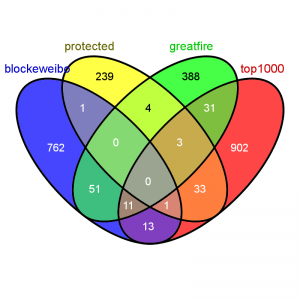
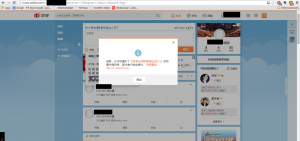
The China Chats keyword list was tested on Sina Weibo four times from Jun to Aug 2013. The data allows us to identify changes in censorship on Sina Weibo over time.
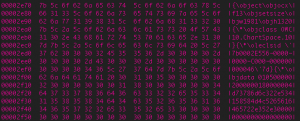
In this post, we report on “Surtr”, a malware family that has been used in targeted malware campaigns against the Tibetan community since November 2012
Citizen Lab Senior Advisor Robert Guerra attended the Internet Corporation for Assigned Names and Numbers (ICANN) Public Meeting that took take place July 14 – 18 in Durban, South Africa.
In June 2013, Citizen Lab released O Pakistan We Stand on Guard for Thee, a research report that reveals evidence that Internet filtering software developed by Canada-based company Netsweeper is deployed on networks operated by the Pakistan Telecommunication Company Limited (PTCL). PTCL is a formerly government-owned enterprise that currently serves as Pakistan’s largest ISP and the manager of its Internet Exchange Point. Previous research by the OpenNet Initiative indicated that Netsweeper is being used for national-level filtering in India and across countries in the Middle East and Gulf including Qatar, UAE, Yemen, India.