Our latest report analyzes our discovery of an Android application called Qatif Today that is bundled with a Hacking Team payload. The app provides news and information in Arabic with a special relevance to the Qatif Governorate of Saudi Arabia, which is a predominantly-Shia community.
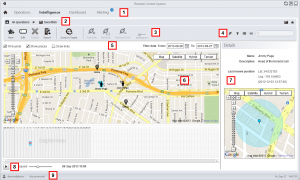
We analyze a newly discovered Android implant that we attribute to Hacking Team and highlight the political subtext of the bait content and attack context. In addition, we expose the functionality and architecture of Hacking Team’s Remote Control system and operator tradecraft in never-before published detail.
Robert Guerra, Senior Advisor to the Citizen Lab, and Dr. Christopher Parsons, a post-doctoral fellow at the Citizen Lab, attended the ICANN 50th public meeting in London on June 22-26.
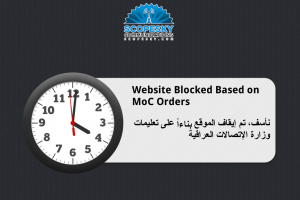
In this report, we document the results of network measurement tests we ran to determine how the Internet is being filtered in Iraq in reaction to ongoing insurgency in the country. The results identify 20 unique URLs that are blocked on three Iraq-based Internet Service Providers. Notably, none of the 7 websites we tested that are affiliated with, or supportive, of the jihadist insurgent group the Islamic State in Iraq and Greater Syria (ISIS) were found to be blocked.
Citizen Lab Director Ron Deibert spoke with The Globe and Mail’s telecom reporter Christine Dobby about recent issues related to the privacy of telecommunications customers’ personal information.
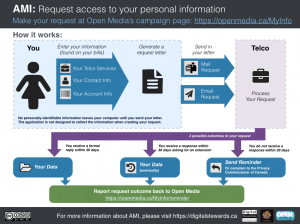
This post first identifies the individual and collective benefits of using the Access My Info tool to request access to one’s personal data held by Canadian data operators. It then discusses technical design decisions that went into the tool’s development and implementation.
Citizen Lab Post-doctoral fellow Christopher Parsons and Cyber Stewards Ramiro Álvarez Ugarte and Hisham Almiraat are some of the experts quoted in the press release.
By getting into the malware business the federal and potentially provincial governments of Canada would be confronted with an ongoing reality: is the role of government to maximally protect its citizens, including from criminals leveraging vulnerabilities to spy on Canadians, or is it to partially protect citizens so long as such protections do not weaken the state’s ability to secure itself from persons suspected of violating any Act of Parliament?
Social Media Watch returns with updates from the EU and US legal landscape, some notable cases of government access to personal data, and an overview of some important reports describing the need for updated regulation in the data economy.
Cyber Stewards Network (CSN) partner Collaboration on International ICT Policy in East and Southern Africa (CIPESA) released a report outlining the policies and practices surrounding Internet freedom in East Africa. Titled “The State of Internet Freedoms in East Africa,” the release of the report has drawn key individuals from the continent’s ICT industry to Kampala, Uganda for a forum.