This report describes a campaign of targeted spyware attacks carried out by a sophisticated operator, which we call Stealth Falcon. The attacks have been conducted from 2012 until the present, against Emirati journalists, activists, and dissidents.
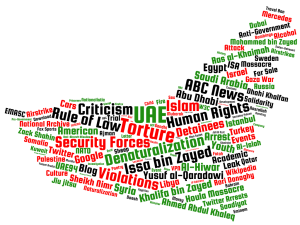
Appendices for the report “Keep Calm and (Don’t) Enable Macros”
Citizen Lab’s Cyber Stewards Network Partner ICT Watch is one of the winners of the 2016 WSIS Champion Projects Award, for their project titled ‘Internet Sehat’ (Internet Healthy) Toward Indonesian Information Society.
Access My Info (AMI), a web tool used to submit disclosure requests to telecommunications providers on the data they collect and share with third parties about their customers, launched in Hong Kong.
Citizen Lab’s Cyber Stewards Network Partner ICT Watch is one of the winners of the 2016 WSIS Champion Projects Award, for their project titled ‘Internet Sehat’ (Internet Healthy) Toward Indonesian Information Society.
In “Chilling Effects: Online Surveillance and Wikipedia Use,” Citizen Lab Research Fellow Jon Penney analyzes the fall of traffic to Wikipedia articles about terror groups and their techniques after the Snowden revelations.
Recent reports have indicated that the Royal Canadian Mounted Police (RCMP) has had a key to unlock encrypted messages sent between BlackBerry users since 2010. Citizen Lab Postdoctoral Fellow Christopher Parsons commented on the significance of the revelations in an interview with VICE Motherboard.
In this research note, we analyze a malware campaign targeting Hong Kong democracy activists. Two new malware families are used in the campaign that we name UP007 and SLServer. Previous reports have shown overlap in the tactics, tools, and procedures used in this campaign in other operations targeting groups in Burma, Hong Kong, and the Tibetan community.

Citizen Lab research partner, Open Effect, announced the release of the full report detailing our year-long research collaboration into the privacy and security of wearable fitness tracking devices.

This report describes privacy and security issues with the Windows and Android versions of QQ Browser. Our research shows that both versions of the application transmit personally identifiable data without encryption or with easily decrypted encryption, and do not adequately protect the software update process.