Research
The Citizen Lab and the Canadian Internet Policy & Public Interest Clinic (CIPPIC) have collaborated to produce a report which provides timely legal analysis, political context, and historical background on the Communications Security Establishment Act and related provisions in Bill C-59 (An Act respecting national security matters), First Reading (December 18, 2017).

This report describes how Ethiopian dissidents in the U.S., U.K., and other countries were targeted with emails containing sophisticated commercial spyware posing as Adobe Flash updates and PDF plugins.

South Korea requires minors to have content filtering apps installed on their phones. A security audit of two child monitoring apps published by major Korean telecoms —KT Olleh Kidsafe and Clean Mobile Plus—finds serious security and privacy issues that put children at risk.

The 19th National Communist Party Congress was held from October 18-24, 2017. WeChat, China’s most popular chat app, blocked a broad range of content related to the Congress.

South Korea requires minors to have content filtering apps installed on their phones. A security audit of two child monitoring apps—Cyber Security Zone and Smart Dream—finds serious security and privacy issues that put children at risk.

Claudio X. González, the director of Mexicanos Contra la Corrupción y la Impunidad (MCCI: Mexicans Against Impunity and Corruption), becomes the 22nd known individual abusively targeted with NSO’s spyware technology in Mexico.

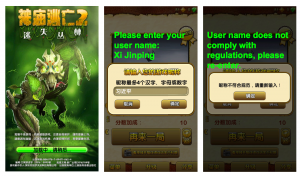
In a recent paper presented at FOCI, Citizen Lab researchers investigate the nature of keyword filtering in Chinese mobile games, supporting a decentralized framework of censorship.
Lawyers representing the families of three slain Mexican women were sent infection attempts with NSO Group’s Pegasus spyware after questioning official accounts of the killings.

As more companies increasingly produce transparency reports, a pertinent question presents itself: how effective are they in altering bahaviour of both corporations and governments? In a recent paper for Business and Society, Citizen Lab’s Chris Parsons examines this in detail.

WeChat and Sina Weibo adapted and evolved their censorship efforts in response to the death of Liu Xiaobo.