Research
Citizen Lab Director Ron Deibert authored an article in the June 2015 edition of the Journal of Democracy, titled “Authoritarianism Goes Global: Cyberspace Under Siege.”
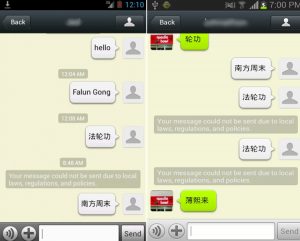
This report is an analysis of the types of content removed by WeChat on its public accounts (also known as “official accounts”) blogging platform.
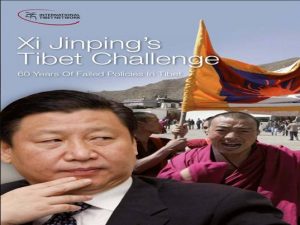
This post analyzes targeted malware attacks against groups in the Tibetan diaspora and Hong Kong that leverage the CVE-2014-4114 vulnerability
The report, authored by Postdoctoral Fellow Christopher Parsons, examines how contemporary telecommunications surveillance is governed in Canada. He concludes that serious failures in transparency and accountability indicate that corporations are failing to manage Canadians’ personal information responsibly and that government irresponsibility surrounding accountability strains its credibility and aggravates citizens’ cynicism about the political process.

Our report reveals that UC Browser poorly secures data in its English and Chinese language versions for Android.
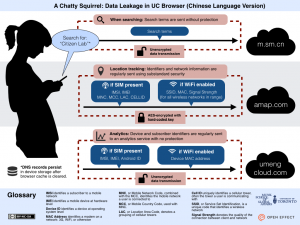
UC Browser is the most popular mobile web browser in China and India, boasting over 500 million users. This report provides a detailed analysis of how UC Browser manages and transmits user data, particularly private data, during its operation. Our research was prompted by revelations in a document leaked by Edward Snowden on which the Canadian Broadcasting Corporation (CBC) was preparing a story.
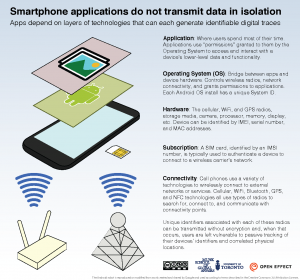
This document describes key identifiers used by mobile devices, highlights some identifiers that are accessible, and often collected, by various parties and the risks associated with the widespread transmission and use of these identifiers.
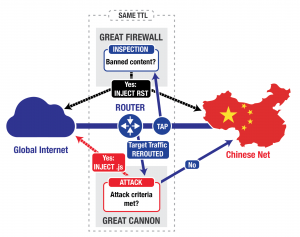
This post describes our analysis of China’s “Great Cannon,” our term for an attack tool that we identify as separate from, but co-located with, the Great Firewall of China. The first known usage of the Great Cannon is in the recent large-scale novel DDoS attack on both GitHub and servers used by GreatFire.org.
Senior Legal Advisor Sarah McKune has contributed a chapter to a new book from Oxford University Press, China and Cybersecurity: Espionage, Strategy and Politics in the Digital Domain (eds. Jon R. Lindsay, Tai Ming Cheung, Derek S. Reveron). Her chapter is entitled “’Foreign Hostile Forces’: The Human Rights Dimension of China’s Cyber Campaigns.”
In our blog post, we describe the results of tests we conducted to measure HTTPS support on the advertisers found on a sample of news websites as well as two sample lists of advertisers. We find a large disparity between our results and the the level of security support referred to in a recent post on the Internet Advertising Bureau’s website.