Research
This report, Islands of Control, Islands of Resistance: Monitoring the 2013 Indonesian IGF, is the first in a series of Citizen Lab reports that apply a mixture of methods, from technical interrogation to field research and social and legal analyses, to study information controls in and around particular events. This report focuses on information controls in and around Indonesia’s hosting of the United Nations Internet Governance Forum (IGF).

This post presents a 22-month infographic overview of how events are correlated with blocking of information related to Bo Xilai on Sina Weibo.

This post is an update to our report on regionally-based keyword censorship in the popular chat application LINE. It covers responses from LINE Corporation to questions around censorship functionality in the application and recent changes to how keyword censorship and traffic encryption operate in the latest versions of LINE.

Governments’ use of biometric systems have raised privacy concerns and the need for greater transparency and accountability. This is because these systems collect and store individuals’ physical traits such as fingerprints, facial recognition, iris scans, and other personal characteristics. Biometric identification has been criticized as being error-prone and unreliable, as well as being fundamentally detrimental to privacy, free expression, and the right to anonymity, especially with regards to vulnerable individuals such as dissidents, whistleblowers, and journalists. Members of the Cyber Stewards Network are active in efforts to raise awareness on the use of biometric systems and surveillance technologies.
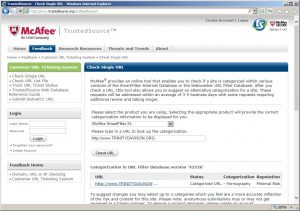
What do the Trinity Davison Lutheran Church, the Filipino American Women’s Network, the Tucson Jazz Institute, the Sacramento Police Activities League, the Pan Iranist Party of Iran, and the Salvation Army of Houston, Texas have in common?
Their websites are all blocked for Internet users in Saudi Arabia, and for most Internet users in the United Arab Emirates
Cyber Steward Network partner Walid Al-Saqaf writes about the recent launch of Yemen’s chapter of the Internet Society for Global Voices Advocacy.
This post is an introduction to Asia Chats, a research project analyzing information controls and privacy in mobile messaging applications used in Asia. The project will produce a series of reports that will begin with a focus on WeChat, LINE, and KakaoTalk. Reports will include analysis based on our technical investigation of censorship or surveillance functionality, assessment of privacy issues surrounding these applications’ use and storage of user data, and comparison of the terms of service and privacy policies of the applications.

This report by Seth Hardy (Senior Security Analyst, Citizen Lab) describes the technical details of client-side censorship functionality in the LINE messenger client for Android, and a method for disabling it.
This post is the first in a series of research reports analyzing information controls and privacy in mobile messaging applications used in Asia. An introduction to the project can be found here

This post analyzes the multistakeholder participation in the 2013 IGF in Indonesia, which has been lauded as a model for how different stakeholder groups can operate at these events, and discusses developments in the country’s Internet governance agenda.
Information Controls: Iran’s Presidential Elections is a collaboration between ASL19 and Psiphon. It evaluates the role and impact of information controls during the Iranian Presidential elections in 2013.