Research
Director Ron Deibert wrote a paper for the Canadian Defence & Foreign Affairs Institute titled Distributed Security as Cyber Strategy: Outlining a Comprehensive Approach for Canada in Cyberspace.
Research Fellow Jon Penney wrote a paper titled Communications Disruption & Censorship under International Law: History Lesson, which was presented at this year’s Second USENIX Workshop on Free and Open Communications on the Internet (FOCI).

Citizen Lab Post-Doctoral Fellow Eneken Tikk Ringas wrote a brief on the work of the UN General Assembly's Group of Governmental Experts (GGE) in 2012 to address threats to international information security in the Disarmament and International Security Committee (also known as the First Committee).
The Citizen Lab has analyzed recent targeted malware attacks against Tibetan organizations that share a common payload — LURK malware — and command-and-control server, as well as several other features.
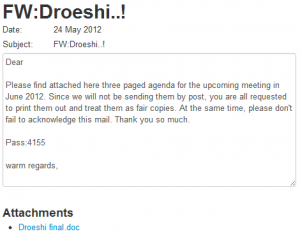
The Citizen Lab announces the publication of a detailed post analyzing several pieces of malware targeting Bahraini dissidents, shared with us by Bloomberg News. The analysis suggests that the malware used is "FinSpy," part of the commercial intrusion kit, Finfisher, distributed by the United Kingdom-based company, Gamma International.
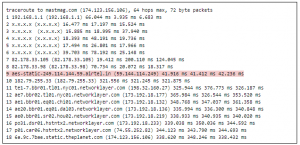
OpenNet Initiative research has documented that web filtering applied by India-based ISPs is also filtering content for customers of an ISP in Oman. This “upstream filtering” is restricting access to news sites, political blogs and file sharing sites for customer’s of Omantel, who have limited opportunities for recourse. Combined with the significant filtering implemented by Omantel itself, this essentially puts users in Oman behind multiple layers of national-level filtering.
The new book, Liberation Technology: Social Media and the Struggle for Democracy, features a chapter by Professor Deibert, entitled “International Mechanisms of Cyberspace Controls”.
Citizen Lab Senior Researcher Helmi Noman submitted a chapter entitled “In the Name of God: Faith-based Internet Censorship in Majority Muslim Countries” for inclusion in the Routledge Handbook of Media Law to be published in December 2012.
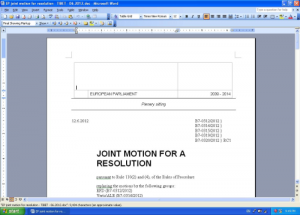
The Citizen Lab analyzes a recent targeted malware attack against the Tibetan community spoofing the June 14, 2012 resolution of the European Parliament (EP) on the human rights situation in Tibet. While such repurposing of authentic content for use as a malware delivery mechanism is not unusual, this incident raises serious questions surrounding the use of legitimate political resources for illegitimate ends.
The use of remote surveillance software against activists has been a feature of the ongoing conflict in Syria. Today, the EFF and Citizen Lab report on the use of a new toolkit by a previously observed attacker. This actor has been circulating malware which surreptitiously installs BlackShades RAT on victims machines.