Op-ed
In an opinion piece for The Globe and Mail, The Citizen Lab’s Emile Dirks, Siena Anstis, Noura Aljizawi, and Ron Deibert, argue that while the final report of the Public Inquiry into Foreign Interference in Federal Electoral Processes and Democratic Institutions (the Hogue Commission) found no evidence of Canadian MPs collaborating with foreign states to […]

Jon Penney, research fellow at The Citizen Lab and an associate professor at the Osgoode Hall Law School at York University, writes an insightful opinion piece in the Globe and Mail critiquing U.S. President Donald Trump’s attempt to delay the enforcement of the TikTok ban. Penney argues that Trump’s executive order is legally flawed […]
“What separates benign foreign influence from malign interference? And if foreign-owned platforms like TikTok are used for both interference and influence, how should we respond?” In this piece for Brookings, Diana Fu, associate professor of political science at the University of Toronto and Emile Dirks, research associate at the Citizen Lab, discuss issues like soft […]
The Parliament of Canada is expected to move forward with Bill C-26, which aims to improve the country’s cyber readiness. In an opinion piece for the Globe and Mail, the Citizen Lab’s Kate Robertson and Ron Deibert caution that the federal bill has the potential to jeopardize the security of telecommunications for everyone in Canada. […]

Citizen lab director Ron Deibert joins Faculty of Law researcher Petra Molnar to warn of the human rights risks in Canada’s use of artificial intelligence in immigration decision-making.
The Citizen Lab’s Ron Deibert and Sarah McKune don’t mince words in a recent op-ed for Just Security about Google’s plan to create a search engine that conforms to China’s demand for censorship.
This call comes on the heels of recent Citizen Lab research which shows that Netsweeper, a Canadian company who has received funding from the Canadian government, is being used by governments to block access to content in ten authoritarian countries around the world, including LGBTQ2+ sites.

In a recent article for the Council on Foreign Relations, the Citizen Lab’s Lennart Maschmeyer discusses how repressive regimes are becoming increasingly effective at targeting opposition groups using digital espionage, both at home and abroad.
During the heated national debate over Bill C-59, which enacted sweeping changes to how Canada’s spy agencies operate, the Citizen Lab’s Lex Gill and Christoper Parsons posed some tough questions about the legislation.
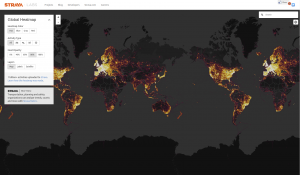
The post covers several categories of information that can be gleaned from examining Strava’s fitness tracker data, ranging from enabling the identification of secret military facilities in “dark areas” to specific identifiable behaviour patterns of at-risk individuals.