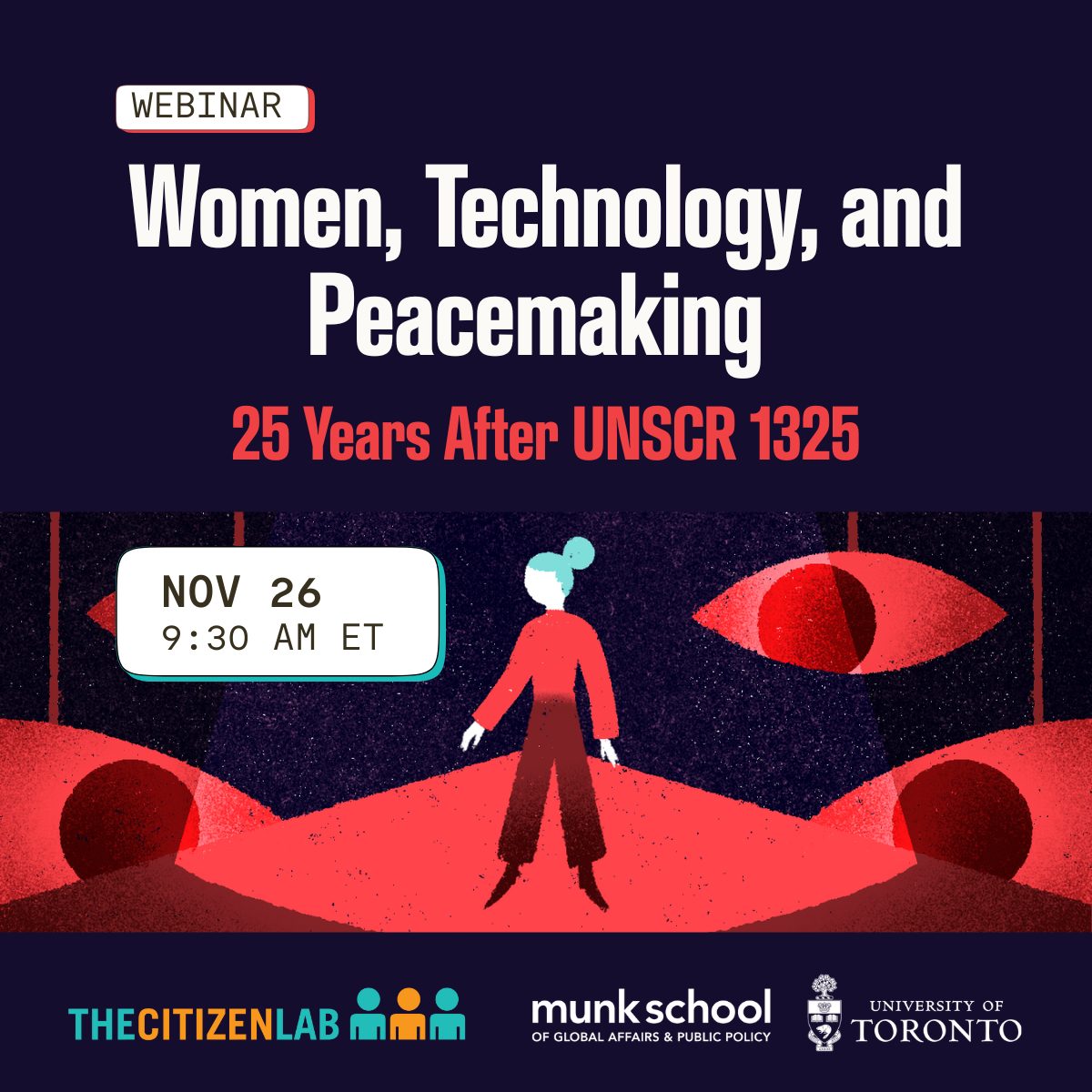
Women, Technology, and Peacemaking Webinar
25 Years After UNSCR 1325
People

Noura Aljizawi
Senior Researcher

Siena Anstis
Senior Legal Advisor

Marcus Michaelsen
Senior Researcher
This event was held on November 26, 2025. A recording of the webinar is available below:
This year marks the 25th anniversary of UN Security Council Resolution 1325, a milestone recognizing women’s essential roles in peacemaking, conflict prevention, and post-conflict recovery. Yet, as the world celebrates this legacy, new realities challenge its celebration.
Join us on November 26, 2025, for a timely conversation on how digital repression and surveillance are reshaping women’s participation in peacebuilding and the Women, Peace and Security (WPS) agenda.
This webinar brings together Citizen Lab researchers with policy advisors, WPS experts, and human rights defenders to reflect on 25 years of the WPS agenda in the age of digital repression. The discussion will explore how gender, technology, and authoritarianism intersect to shape women’s participation in peace and security, and how targets of gendered digital attacks and feminist movements are building resilience and reimagining women’s digital security for the next 25 years.
About UNSCR 1325
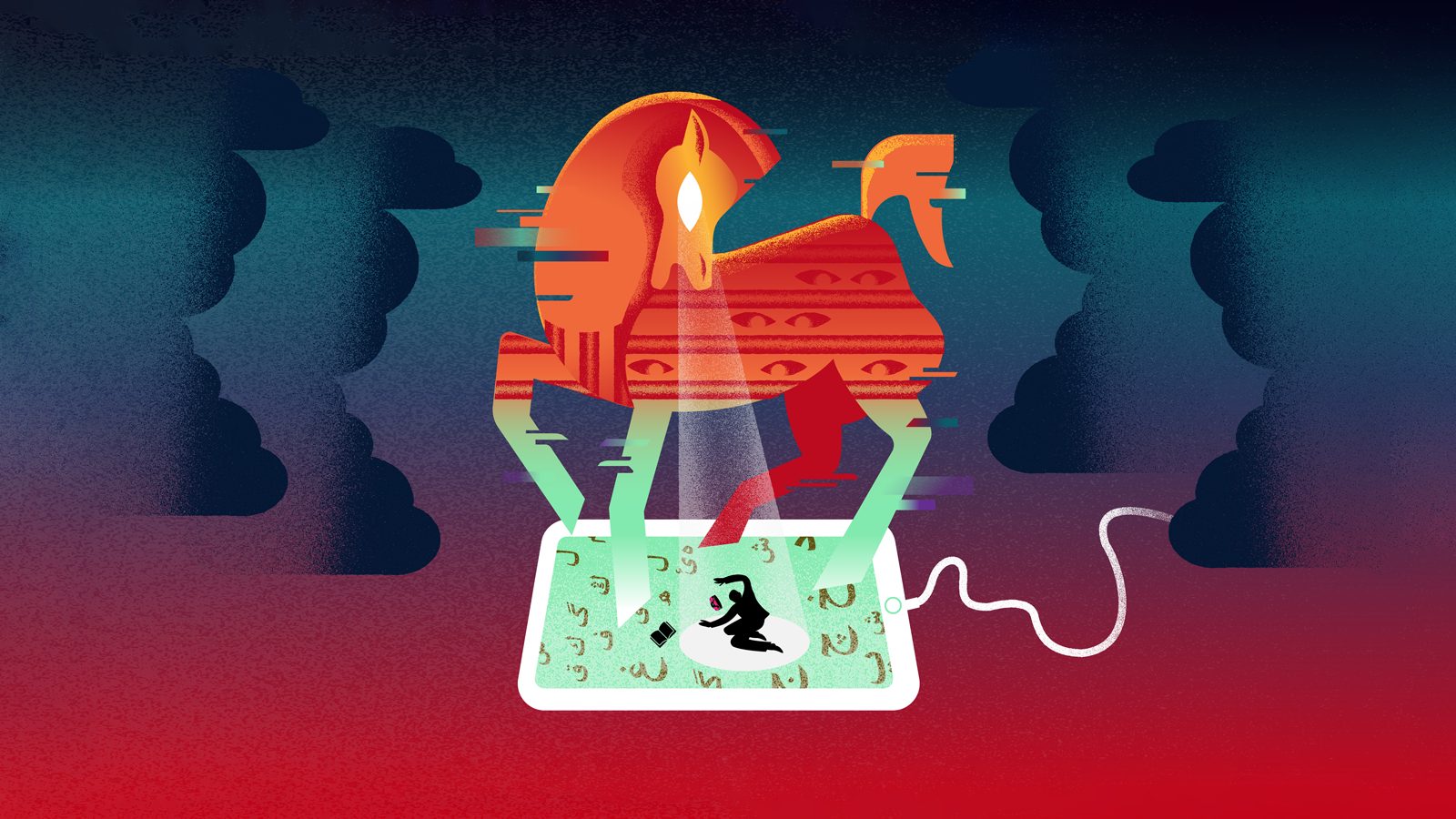
The United Nations Security Council (UNSC) adopted resolution (S/RES/1325) on women, peace and security on October 31, 2000. UNSCR 1325 calls for women’s meaningful participation in peace and security processes; however, 25 years later, the world faces new and complex realities that challenge the spirit of this resolution. Digital technologies have introduced new forms of communication and alternative public spaces. They have also become tools of surveillance, control, harassment, and violence in the hands of patriarchal, authoritarian, and militarized powers.
The widespread use of mercenary spyware, targeted digital surveillance, online harassment, and disinformation campaigns has created an environment in which women journalists, human rights defenders, and peacemakers are systematically targeted. These technologies enable state and non-state actors to extend gender-based violence beyond physical spaces and into the digital sphere. Even when women are in exile, digital technology enables harmful actors to threaten and silence women from afar.
While the international community celebrates the progress made on the WPS agenda, women who engage in peacebuilding and human rights work still face multi-layered forms of violence that are simultaneously gendered, political, and technological.This webinar situates these realities within an intersectional feminist framework, recognizing that women from marginalized communities, including those defined by race, ethnicity, sexuality, class, religion, or migration status, experience compounded forms of exclusion and vulnerability. Understanding how these intersecting systems of power operate in digital environments is essential to advancing an inclusive and transformative WPS agenda for the next 25 years.