Mass Surveillance
Identifying the technical, institutional, and commercial foundations of mass surveillance and examining its human rights implications.
Read more
Mass surveillance is the systematic monitoring, collection, and analysis of personal data by state and non-state entities.
The data generated by devices, applications, and platforms has given rise to new forms of mass surveillance, such as biometric surveillance, mobile network monitoring, advertising intelligence (ADINT), and automated pattern recognition systems.
New technologies, artificial intelligence, and commercial data brokers have transformed surveillance capabilities, enabling governments and corporations to capture, process, and analyze unprecedented volumes of personal information, often without an individual’s knowledge or consent. These mass surveillance opportunities pose serious threats to human rights and civil society.
We analyze both the technological infrastructure that makes mass surveillance possible and the evolving regulatory and legal frameworks that govern these practices.

LATEST RESEARCH
-
The Architecture of Digital Repression
Citizen Lab senior researcher Irene Poetranto writes for the Carnegie Endowment for International Peace about surveillance in Myanmar.
March 17, 2026 -
You Move, They Follow
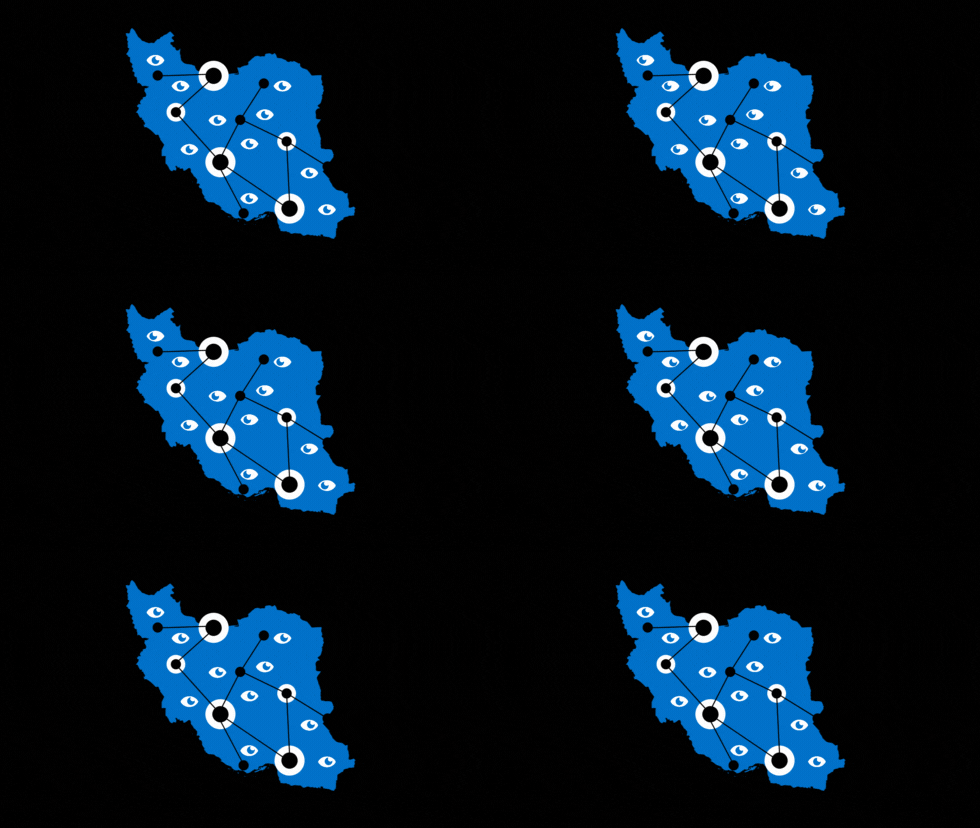
Uncovering Iran’s Mobile Legal Intercept System
A confidential source sent the online news organization, The Intercept, a series of internal documents and communications providing details on what appear to be plans to develop and launch an Iranian mobile network, including subscriber management operations and services, and integration with a legal intercept solution. Some of this communication included representatives of the Communications Regulatory Authority of Iran (CRA). In October 2022, The Intercept shared this material with Citizen Lab researchers for analysis. The following report provides a summary of our analysis of this material and discusses its wider implications.
January 16, 2023
-
Mass Iris Scan Collection in Qinghai from 2019–2022
Police led mass iris scan collection in Qinghai, a region with a population that is 49.4% non-Han, including Tibetans and Hui Muslims. Iris scan collection is part of long-standing police intelligence gathering programs. Through this data collection, Qinghai’s police are effectively treating entire communities as populated by potential threats to social stability.
December 14, 2022

RECENT NEWS
BROWSE RELATED CONTENT
OUR EXPERTS IN MASS SURVEILLANCE
-

Wolfie Christl
Senior Researcher
-
Moses Karanja
PhD Candidate
-
Sarah McKune
Senior Researcher
-
Ksenia Ermoshina
Senior Researcher
-
Kate Robertson
Senior Research Associate
-
Emile Dirks
Senior Research Associate