Publications
As a follow-up to our March 2020 report, we conducted daily tests on WeChat and collected 2,174 censored keywords between January to May 2020. This data provides a view into how narratives and messaging on the pandemic are controlled and molded on social media in China.

The analysis of YY and WeChat indicates broad censorship—blocking sensitive terms as well as general information and neutral references—potentially limiting the public’s ability to access information that may be essential to their health and safety.
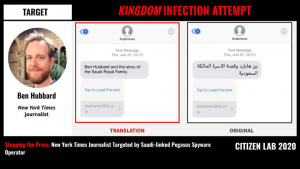
New York Times journalist Ben Hubbard was targeted with NSO Group’s Pegasus spyware via a June 2018 SMS message promising details about “Ben Hubbard and the story of the Saudi Royal Family.” The SMS contained a hyperlink to a website used by a Pegasus operator that we call KINGDOM. We have linked KINGDOM to Saudi Arabia. In 2018, KINGDOM also targeted Saudi dissidents including Omar Abdulaziz, Ghanem al-Masarir, and Yahya Assiri, as well as a staff member at Amnesty International.
This campaign is the first documented case of one-click mobile exploits used to target Tibetan groups, and reflects an escalation in the sophistication of digital espionage threats targeting the community.

In the days leading up to the 30th anniversary of June 4 1989, YY, a popular live streaming platform in mainland China, updated its keyword blacklists with content focused on Democracy Movement related memorials and activism in Hong Kong.