Asia Pacific
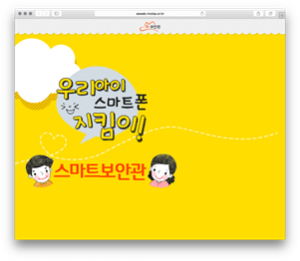
The Citizen Lab at the Munk School of Global Affairs, University of Toronto is releasing a new report, “Are the Kids Alright? Digital Risks to Minors from South Korea’s Smart Sheriff Application.” The report details results of two independent audits of the privacy and security of Smart Sheriff, a parental monitoring application that has been promoted by the South Korean government.
오늘 토론토 대학교 뭉크스쿨 글로벌상황연구소 산하 시티즌랩 (Munk School of Global Affairs, Citizen Lab)에서는 새로운 보고서 “우리의 아이들은 안전한가? 청소년들을 디지털 위험에 노출시키는 한국의 스마트보안관 앱(Are the Kids Alright? Digital Risks to Minors from South Korea’s Smart Sheriff Application)”을 발표한다. 동 보고서는 한국 정부가 권장하는 유해정보 차단 소프트웨어인 “스마트보안관”의 프라이버시 보호 정도 및 보안성에 대한 독립적인 두 건의 감사 결과를 상세하게 서술하고 있다.
This report describes the results of two independent security audits of Smart Sheriff, one by researchers who collaborated at the 2015 Citizen Lab Summer Institute (held at the Munk School of Global Affairs, University of Toronto), and the other by the auditing firm Cure53. The combined audits identified twenty-six security vulnerabilities in recent versions of Smart Sheriff (versions 1.7.5 and under). These vulnerabilities could be leveraged by a malicious actor to take control of nearly all Smart Sheriff accounts and disrupt service operations.
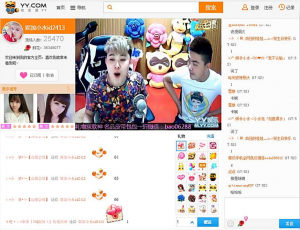
In this paper presented at USENIX FOCI 2015 we use reverse engineering to provide a view into how keyword censorship operates on four popular social video platforms in China: YY, 9158, Sina Show, and GuaGua. We also find keyword surveillance capabilities on YY. Our findings show inconsistencies in the implementation of censorship and the keyword lists used to trigger censorship events between the platforms we analyzed. We reveal a range of targeted content including criticism of the government and collective action. These results provide evidence that there is no monolithic set of rules that govern how information controls are implemented in China.
This research note outlines what we know about the use of Hacking Team’s Remote Control System (RCS) by South Korea’s National Intelligence Service (NIS). The note synthesizes information found in publicly leaked materials, as well as our own research.

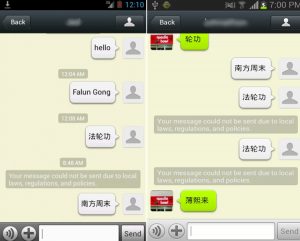
This report is an analysis of the types of content removed by WeChat on its public accounts (also known as “official accounts”) blogging platform.
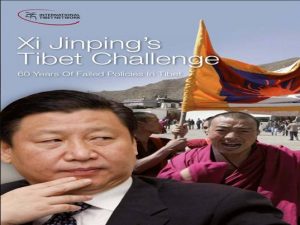
This post analyzes targeted malware attacks against groups in the Tibetan diaspora and Hong Kong that leverage the CVE-2014-4114 vulnerability
China’s censorship of social media platforms has largely been focused on speech that targets or criticizes the government, until recently. The Cyberspace Administration of China’s new regulations will target sexual innuendo, in particular 25 of the most popular “dirty words” in China.
Our report reveals that UC Browser poorly secures data in its English and Chinese language versions for Android.
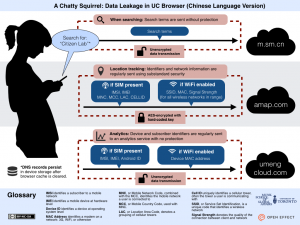
UC Browser is the most popular mobile web browser in China and India, boasting over 500 million users. This report provides a detailed analysis of how UC Browser manages and transmits user data, particularly private data, during its operation. Our research was prompted by revelations in a document leaked by Edward Snowden on which the Canadian Broadcasting Corporation (CBC) was preparing a story.