China
As a follow-up to our March 2020 report, we conducted daily tests on WeChat and collected 2,174 censored keywords between January to May 2020. This data provides a view into how narratives and messaging on the pandemic are controlled and molded on social media in China.

In order to build up its censorship algorithm, WeChat surveils international accounts to decide what gets through to China-registered users. A Citizen Lab study finds that the messaging app blacklisted more than 500 keyword combinations relating to the COVID-19 pandemic.
On May 7 2020, the Citizen Lab published a report that documents how WeChat (the most popular social app in China) conducts surveillance of images and files shared on the platform and uses the monitored content to train censorship algorithms. This document provides a summary of the research findings and questions and answers from the research team.

WeChat communications conducted entirely among non-China-registered accounts are subject to pervasive content surveillance that was previously thought to be exclusively reserved for China-registered accounts.

This report examines the encryption that protects meetings in the popular Zoom teleconference app. We find that Zoom has “rolled their own” encryption scheme, which has significant weaknesses. In addition, we identify potential areas of concern in Zoom’s infrastructure, including observing the transmission of meeting encryption keys to China.

The analysis of YY and WeChat indicates broad censorship—blocking sensitive terms as well as general information and neutral references—potentially limiting the public’s ability to access information that may be essential to their health and safety.

In this work, we study how Tencent implements image filtering on WeChat. We found that Tencent implements realtime, automatic censorship of chat images on WeChat based on what text is in an image and based on an image’s visual similarity to those on a blacklist. Tencent facilitates this realtime filtering by maintaining a hash index of MD5 hashes of sensitive image files.
In the days leading up to the 30th anniversary of June 4 1989, YY, a popular live streaming platform in mainland China, updated its keyword blacklists with content focused on Democracy Movement related memorials and activism in Hong Kong.
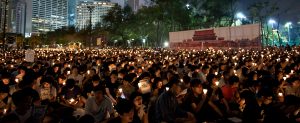
In the days leading up to the 30th anniversary of June 4 1989, YY, a popular live streaming platform in mainland China, updated its keyword blacklists with content focused on Democracy Movement related memorials and activism in Hong Kong.
In the days leading up to the 30th anniversary of June 4 1989, YY, a popular live streaming platform in mainland China, updated its keyword blacklists with content focused on Democracy Movement related memorials and activism in Hong Kong.