China
We are writing to ask you to ensure that Google drops Project Dragonfly and any plans to launch a censored search app in China, and to re-affirm the company’s 2010 commitment that it won’t provide censored search services in the country.

The Citizen Lab’s Ron Deibert and Sarah McKune don’t mince words in a recent op-ed for Just Security about Google’s plan to create a search engine that conforms to China’s demand for censorship.
A new paper by the Citizen Lab investigates how Chinese censorship reaches independent developers and reveals that, while developers include censorship lists in open source projects, there is little apparent similarity in these blacklists, raising several questions about their origins.

Citizen Lab research showed that, at the time, WeChat seemed to use a relatively crude comparison between banned images and content uploaded to the site in order to decide what to block.
New Citizen Lab research reveals how China’s most popular app filters sensitive images and suggests techniques for evasion.
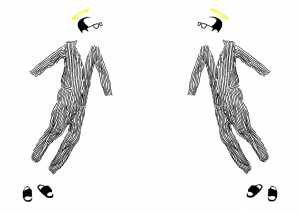
This report demonstrates the technical underpinnings of how WeChat image censorship operates and suggests possible evasion strategies.

This report demonstrates the technical underpinnings of how WeChat image censorship operates and suggests possible evasion strategies.
Investigation of a malware campaign targeting the Tibetan community and discussion of the challenges in analyzing closed espionage ecosystems.

The 19th National Communist Party Congress was held from October 18-24, 2017. WeChat, China’s most popular chat app, blocked a broad range of content related to the Congress.

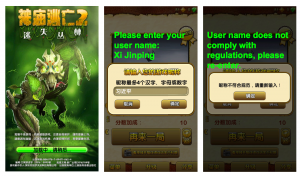
In a recent paper presented at FOCI, Citizen Lab researchers investigate the nature of keyword filtering in Chinese mobile games, supporting a decentralized framework of censorship.