China
WeChat and Sina Weibo adapted and evolved their censorship efforts in response to the death of Liu Xiaobo.

This report reveals a campaign of reconnaissance, phishing, and malware operations that use content and domains made to mimic Chinese language news websites.

This report reveals a campaign of reconnaissance, phishing, and malware operations that use content and domains made to mimic Chinese language news websites.
This report analyzes the information control practices related to a national crackdown on Chinese rights lawyers and activists on two leading Chinese social media networks. We document the Search filtering on Weibo, China’s Twitter-like service, as well as keyword and image censorship on WeChat, the most popular chat app in China.
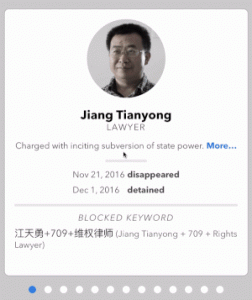
This report analyzes the information control practices related to a national crackdown on Chinese rights lawyers and activists on two leading Chinese social media networks. We document the Search filtering on Weibo, China’s Twitter-like service, as well as keyword and image censorship on WeChat, the most popular chat app in China.
The second post in this series examines a Chinese mobile payment app feature increasingly covered in foreign media: testing of what may one day be a nationwide official social credit system to replace its traditional analog counterpart. Our exploration of potential security, privacy, and other issues of such a system is meant to raise questions that can inform discussions about how it will evolve.
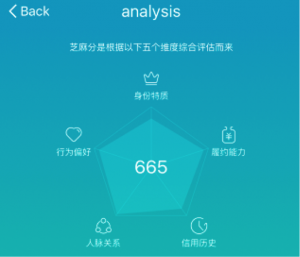
This research series presents an in-depth examination of mobile payment systems, a rapidly evolving form of financial technology. We will provide an overview of how they are used in China–where they are taking off faster than anywhere else in the world–and what implications their security and data protection practices may have for millions of users, by presenting a case study on Alipay.

A CBC article exploring the Chinese government’s use of surveillance techniques, what has been called the “Great Firewall,” highlights Citizen Lab’s work in studying the state and private enterprises that support it. In an interview, Citizen Lab Director Ron Deibert comments on the surveillance practices that the regime uses.
From January 2 to 13 2017, His Holiness the Dalai Lama is holding a popular Tibetan Buddhist teaching called Kalachakra in Bodh Gaya, India. Increased restrictions from the government of China has barred Tibetans in Tibet from attending the teachings. This report documents blocking of Kalachakra-related keywords on WeChat revealing how restrictions on the ritual extend online.

Tibet Action Institute has released a report documenting censorship on Youku, an online video platform.