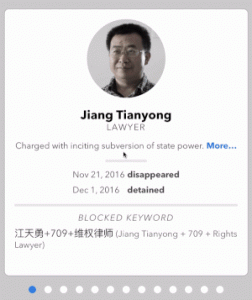
In order to build up its censorship algorithm, WeChat surveils international accounts to decide what gets through to China-registered users. A Citizen Lab study finds that the messaging app blacklisted more than 500 keyword combinations relating to the COVID-19 pandemic.
On May 7 2020, the Citizen Lab published a report that documents how WeChat (the most popular social app in China) conducts surveillance of images and files shared on the platform and uses the monitored content to train censorship algorithms. This document provides a summary of the research findings and questions and answers from the research team.

WeChat communications conducted entirely among non-China-registered accounts are subject to pervasive content surveillance that was previously thought to be exclusively reserved for China-registered accounts.

In this work, we study how Tencent implements image filtering on WeChat. We found that Tencent implements realtime, automatic censorship of chat images on WeChat based on what text is in an image and based on an image’s visual similarity to those on a blacklist. Tencent facilitates this realtime filtering by maintaining a hash index of MD5 hashes of sensitive image files.
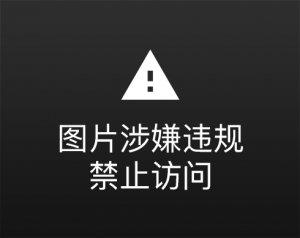
Citizen Lab research showed that, at the time, WeChat seemed to use a relatively crude comparison between banned images and content uploaded to the site in order to decide what to block.
New Citizen Lab research reveals how China’s most popular app filters sensitive images and suggests techniques for evasion.
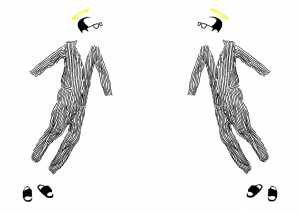
This report demonstrates the technical underpinnings of how WeChat image censorship operates and suggests possible evasion strategies.

This report demonstrates the technical underpinnings of how WeChat image censorship operates and suggests possible evasion strategies.
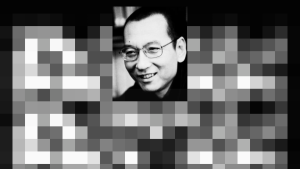
WeChat and Sina Weibo adapted and evolved their censorship efforts in response to the death of Liu Xiaobo.
This report analyzes the information control practices related to a national crackdown on Chinese rights lawyers and activists on two leading Chinese social media networks. We document the Search filtering on Weibo, China’s Twitter-like service, as well as keyword and image censorship on WeChat, the most popular chat app in China.