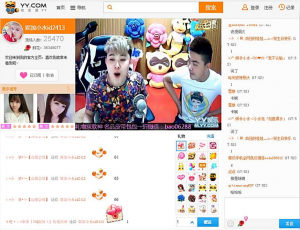
YY
As a follow-up to our March 2020 report, we conducted daily tests on WeChat and collected 2,174 censored keywords between January to May 2020. This data provides a view into how narratives and messaging on the pandemic are controlled and molded on social media in China.

The analysis of YY and WeChat indicates broad censorship—blocking sensitive terms as well as general information and neutral references—potentially limiting the public’s ability to access information that may be essential to their health and safety.

In the days leading up to the 30th anniversary of June 4 1989, YY, a popular live streaming platform in mainland China, updated its keyword blacklists with content focused on Democracy Movement related memorials and activism in Hong Kong.

In this report, we reverse engineer three popular live streaming platforms (YY, Sina Show, and 9158) and find keyword lists used to censor chat messages. Tracking changes to the keyword lists over the past year gives an inside look into how these applications implement censorship

In this paper presented at USENIX FOCI 2015 we use reverse engineering to provide a view into how keyword censorship operates on four popular social video platforms in China: YY, 9158, Sina Show, and GuaGua. We also find keyword surveillance capabilities on YY. Our findings show inconsistencies in the implementation of censorship and the keyword lists used to trigger censorship events between the platforms we analyzed. We reveal a range of targeted content including criticism of the government and collective action. These results provide evidence that there is no monolithic set of rules that govern how information controls are implemented in China.