Citizen Lab researchers were able to identify over a thousand web addresses used to deliver Pegasus spyware to the phones of targets in 45 countries. Pegasus, developed by Israel’s NSO Group, claims it is used against terrorists and criminals, but an analysis by Bill Marczak found evidence of Pegasus spyware on a phone belonging Jamal Khashoggi’s inner circle.
In this submission, we urge the TPSB to centre precaution, substantive equality, human rights, privacy protections, transparency, and accountability in its policy on the use of AI technology by the Toronto Police Services (TPS).

Two Egyptians—exiled politician Ayman Nour and the host of a popular news program (who wishes to remain anonymous)—were hacked with Predator spyware, built and sold by the previously little-known mercenary spyware developer Cytrox. The phone of Ayman Nour was simultaneously infected with both Cytrox’s Predator and NSO Group’s Pegasus spyware, operated by two different government clients.

Front Line Defenders’ analysis indicated that six devices belonging to six Palestinian human rights defenders were hacked with Pegasus, a spyware developed by the cyber-surveillance company NSO Group. Both the Citizen Lab and Amnesty International’s Security Lab independently confirmed these findings.

China’s sophisticated filtering system, known as the Great Firewall (GFW), is the region’s biggest impediment to the freedom of information. The GFW is built by the Chinese government and is continuously developed to serve their political interests. In this report, we introduce the design of GFWatch, a large-scale longitudinal measurement platform that informs the public about how GFW censorship changes over time and its negative impact on the free flow of information.
New York Times journalist and bureau chief, Ben Hubbard, discusses working with the Citizen Lab and discovering that he had been hacked several times by operators using NSO Group’s Pegasus spyware.
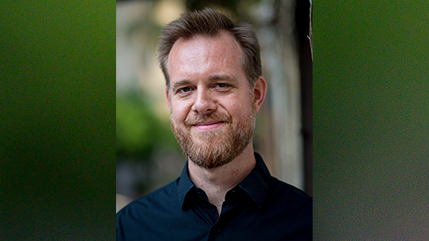
Our forensic analysis of two iPhones belonging to Hubbard found evidence of Pegasus infections in July 2020 and June 2021. Notably, these infections occurred after Hubbard reported in January 2020 that we found that he was targeted in 2018 by the Saudi Arabia-linked Pegasus operator that we call KINGDOM.
Algorithmic policing technologies, including facial recognition, have arrived or are coming to Canadian cities and provinces, and they are doing so quickly. We have identified a number of significant policy, practice, and legal deficits related to the use of algorithmic policing technologies in Canada, including imminent or foreseeable impacts to human rights and fundamental freedoms including the rights to privacy, liberty, and equality, expressive and associational freedoms, and others.
The statement was delivered in the context of Chelsea Manning’s inadmissibility proceeding before the Immigration and Refugee Board of Canada.
“Smart” in-store shopping carts, developed by Caper and used by Sobeys, issue electronic receipts via SMS message and share a URL that uses an easily predictable format. These receipts contain a number of personal data points, including the customer’s partial credit/debit/Air Miles card numbers, a full list of purchases, and the date, time, and location of the customer’s purchase.