Research
This blog post seeks to map out the infrastructure and governance of ICTs in the country, and explores the trends and challenges regarding the right to freedom of expression and access to information, that is grounded in the universal human rights framework.
An Indonesian translation of this post is available here.
Terjemahan dalam bahasa Indonesia dari halaman ini tersedia disini.
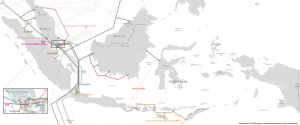
Building on past network measurements, legal, and policy analyses undertaken by the OpenNet Initiative, we set out to apply a mixed-methods approach to better understand the current situation in Indonesia. Our analysis is set in the context not only of the 2013 IGF, but amidst increasingly intense debates about free expression and access to information, and rapid technological change and development.
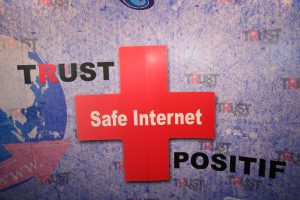
This post will summarize Citizen Lab’s prior research on surveillance in Indonesia, including documented evidence of FinFisher command and control servers and Blue Coat Systems devices on IPs owned by Indonesian ISPs. It will then identify recent trends in Indonesian surveillance practices, laws, and regulations that provide potential avenues for further research.
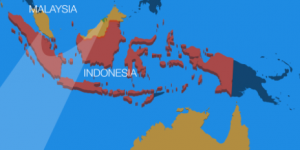
The Citizen Lab is pleased to announce the release of a new report by Director Ron Deibert, “Shutting the Backdoor: The Perils of National Security and Digital Surveillance Programs,” written for the Strategic Studies Working Group (SSWG), a partnership between the Canadian Defence & Foreign Affairs Institute (CDFAI) and the Canadian International Council (CIC).

On October 22-25, 2013, Indonesia will host the eighth annual Internet Governance Forum (IGF), a multi-stakeholder dialogue on the issues and policies of Internet governance. The main theme of this year’s IGF is “Building Bridges: Enhancing Multi-stakeholder Cooperation for Growth and Sustainable Development.”
This post is the first in a series that will explore online freedom of expression and the state of information controls in Indonesia in the context of their role as host of the IGF.

The Citizen Lab is pleased to announce the release of a new publication by Director Ron Deibert, “Bounding Cyber Power: Escalation and Restraint in Global Cyberspace, ” written for the CIGI Internet Governance Paper series.
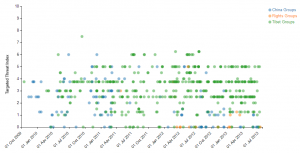
The Targeted Threat Index is a metric for assigning an overall threat ranking score to email messages that deliver malware to a victim’s computer. The TTI metric was first introduced at SecTor 2013 as part of the talk “RATastrophe: Monitoring a Malware Menagerie” by Katie Kleemola, Seth Hardy, and Greg Wiseman.
Recent research from The Citizen Lab has detected the presence of devices capable of surveillance on networks operated by Nigerian Internet service providers. In January 2013, Citizen Lab researchers found installations of Blue Coat Systems’ PacketShaper device on netblocks associated with IPNX ISP and Cobranet. In April 2013, Citizen Lab released “For Their Eyes Only: The Commercialization of Digital Spying,” in which researchers identified FinFisher servers on a network operated by Suburban Telecom.
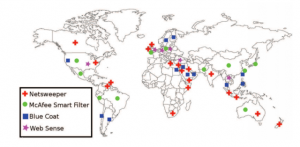
The paper presents an initial methodology for identifying and confirming the use of URL filtering products around the world.
In 2013, the Paradigm Initiative Nigeria (PIN) published “The Economic Cost of Cybercrime in Nigeria,” a report written by ‘Gbenga Sesan, Babatope Soremi, and Bankole Oluwafemi. The authors provide quantitative data for measuring the extent of cybercrime in Nigeria and propose recommendations for combating its influence in the country. PIN’s report is the first major study dedicated entirely toward quantitatively measuring the costs of cybercrime in Nigeria.