Research
Drawing on the lived experiences of 85 women human rights defenders originating from 24 countries of origin and residing in 23 host countries, we examine how gender and sexuality play a central role in digital transnational repression.

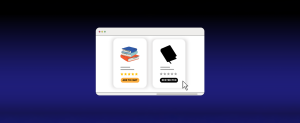
We analyze the system Amazon deploys on the US “amazon.com” storefront to restrict shipments of certain products to specific regions. We found 17,050 products that Amazon restricted from being shipped to at least one world region. – While many of the shipping restrictions are related to regulations involving WiFi, car seats, and other heavily regulated product categories, the most common product category restricted by Amazon in our study was books.
In an article for the Harvard Kennedy School’s Misinformation Review, Gabrielle Lim, doctoral fellow at The Citizen Lab, and co-authors Irene Pasquetto (University of Maryland) and Samantha Bradshaw (American University), discuss the complex challenges facing the field of misinformation.

This report performs the first public analysis of MMTLS, the main network protocol used by WeChat, an app with over one billion users. The report finds that MMTLS is a modified version of TLS, however some of the modifications have introduced cryptographic weaknesses.

In a recent article published in the peer-reviewed journal Globalizations, The Citizen Lab’s Siena Anstis, senior legal researcher, and Émilie LaFlèche, former legal intern, examine how digital abuse against women exacerbates the sexism and patriarchal structures that exist in the physical world.
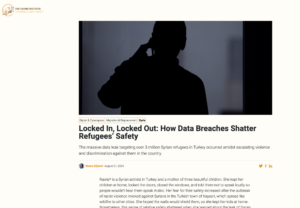
In an article published by the Tahrir Institute for Middle East Policy, Citizen Lab senior researcher Noura Aljizawi discusses the leak of personal data of Syrian refugees in Türkiye and the severe impact on their lives.
In an article for Lawfare, The Citizen Lab’s senior research associate Kate Robertson analyzes how, in its current form, the draft treaty is poised “to become a vehicle for complicity in the global mercenary spy trade.”
A sophisticated spear phishing campaign has been targeting Western and Russian civil society. In collaboration with Access Now, and with the participation of numerous civil society organizations, we uncover this operation and link it to COLDRIVER, a group attributed by multiple governments to the Russian Federal Security Service (FSB).

“What separates benign foreign influence from malign interference? And if foreign-owned platforms like TikTok are used for both interference and influence, how should we respond?” In this piece for Brookings, Diana Fu, associate professor of political science at the University of Toronto and Emile Dirks, research associate at the Citizen Lab, discuss issues like soft […]
In a joint investigation with Access Now, we found that seven Russian and Belarusian-speaking independent journalists and opposition activists based in Europe were targeted and/or infected with NSO Group’s Pegasus mercenary spyware.