Research
At least five civil society victims of QuaDream’s spyware and exploits were identified in North America, Central Asia, Southeast Asia, Europe, and the Middle East. Victims include journalists, political opposition figures, and an NGO worker. We identify traces of a suspected iOS 14 zero-click exploit used to deploy QuaDream’s spyware.

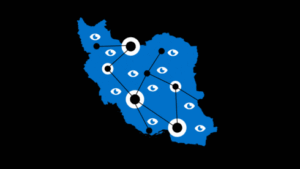
A confidential source sent the online news organization, The Intercept, a series of internal documents and communications providing details on what appear to be plans to develop and launch an Iranian mobile network, including subscriber management operations and services, and integration with a legal intercept solution. Some of this communication included representatives of the Communications Regulatory Authority of Iran (CRA). In October 2022, The Intercept shared this material with Citizen Lab researchers for analysis. The following report provides a summary of our analysis of this material and discusses its wider implications.
On December 15, 2022, as part of our regular re-analysis of past cases to find additional spyware infection indicators and details, we discovered that a researcher had misread the labels assigned to two individuals’ results, leading to a confusion between phones owned by two people with the same initials who were part of the same […]

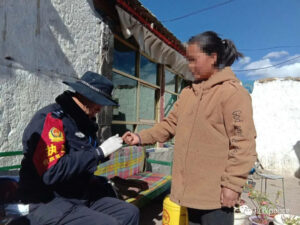
Police led mass iris scan collection in Qinghai, a region with a population that is 49.4% non-Han, including Tibetans and Hui Muslims. Iris scan collection is part of long-standing police intelligence gathering programs. Through this data collection, Qinghai’s police are effectively treating entire communities as populated by potential threats to social stability.

Analysis and recommendations pertaining to the collection of de-identified mobility data and its use in Canadian privacy law. In this explainer, we discuss our findings and recommendations with Amanda Cutinha and Christopher Parsons, the report’s authors.

We investigate the collection of mobility data by the federal government of Canada, its legality under the existing and proposed privacy regime, and proposed recommendations for the reform of draft Bill C-27 which would address many of the issues in the governance of mobility data.
This report offers 30 recommendations to the draft legislation in an effort to correct its secrecy and accountability deficiencies, while also suggesting amendments which would impose some restrictions on the range of powers that the government would be able to wield. It is important that these amendments are seriously taken up due to the sweeping nature of the legislation.

Mexican digital rights organization R3D, with technical support from the Citizen Lab, has determined that Mexican journalists and a human rights defender were infected with Pegasus between 2019 and 2021. The infections occurred years after the first revelations of Pegasus abuses in Mexico, and after Mexico’s current President assured the public that the government no longer used the spyware, and that there would be no further abuses.

We find that mass DNA collection in Tibet is another mass DNA collection campaign conducted under the Xi Jinping administration (2012–present), along with the mass DNA collection campaign in the Xinjiang Uyghur Autonomous Region and the police-led national program of male DNA collection.
Our investigation uncovered an extensive Pegasus hacking operation against pro-democracy campaigners in Thailand. At least 30 forensically-confirmed victims of NSO Group’s Pegasus spyware between October 2020 and November 2021.