Brief
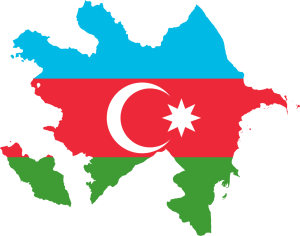
The Azerbaijani government has systematically eliminated forums for civil society and political opposition, stifling all critical debate. Civic and political activists, journalists, academics, lawyers and many others have been subjected to arrests, legal prosecution, and other forms of relentless state repression. Government critics abroad have not been spared. The authorities rely on transnational repression methods, ranging from digital surveillance to assassinations, to silence dissent beyond its borders.
The Eritrean government has a long history of controlling its nationals abroad and using them for keeping the regime in power. Eritrea’s diaspora has grown through different waves of emigration during the three-decade-long armed struggle for independence and the war against Ethiopia. This exodus has also been triggered by the introduction of the open-ended mandatory national service in 2002 under the increasingly autocratic rule of President Isaias Afewerki and the People’s Front for Democracy and Justice (PFDJ).

Since 2014, the Chinese government has escalated its repression against Uyghurs and other Turkic ethnic minorities in the Xinjiang region in northwestern China. The entire region has been subjected to a comprehensive system of mass surveillance, mobility controls, arbitrary detention, forced labor, and forced sterilizations. China’s efforts extend also across borders as its authorities engage in a widespread campaign of transnational repression that targets individuals both on the basis of their ethnic identity and their activities.

In a new study, Citizen Lab sheds light on the massive security threats facing Latin Americans. Citizen Lab and Open Technology Fund (OTF) fellow Beau Kujath in collaboration with SocialTIC finds that mobile applications in Latin America puts millions of users at a security and privacy risk. Beau’s research focuses on three types of mobile […]

We confirm that two members of Serbian civil society were targeted with spyware earlier this year. Both have publicly criticized the Serbian government. We are not naming the individuals at this time by their request. The Citizen Lab’s technical analysis of forensic artifacts was conducted in support of an investigation led by Access Now in collaboration with the SHARE Foundation. Researchers from Amnesty International independently analyzed the cases and their conclusions match our findings.

Amnesty International’s Security Lab has just published Caught in the Net as part of the European Investigative Collaborations‘ Predator Files, which details a threat actor sending what they assess to be Predator infection links on social media in replies to Twitter / X posts by officials, journalists and other members of civil society. The Citizen […]

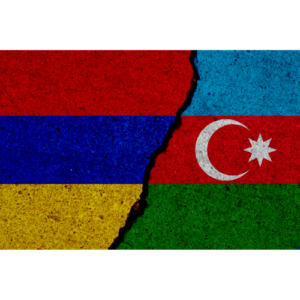
We identified widespread Pegasus spyware infections within Armenian civil society. We also identified two suspected Pegasus operators in Azerbaijan, whom we call BOZBASH and YANAR.
We confirm that in 2020 and 2021 we observed and notified the government of the United Kingdom of multiple suspected instances of Pegasus spyware infections within official UK networks, including the Prime Minister’s Office and the Foreign and Commonwealth Office.
Our forensic analysis confirms that phones belonging to three individuals in Bahrain were hacked in 2021 with NSO Group’s Pegasus spyware.

Front Line Defenders’ analysis indicated that six devices belonging to six Palestinian human rights defenders were hacked with Pegasus, a spyware developed by the cyber-surveillance company NSO Group. Both the Citizen Lab and Amnesty International’s Security Lab independently confirmed these findings.