Brief
In this post we analyze the partial disclosures concerning Canada’s federal agencies’ domestic telecommunications surveillance practices. We argue that key federal agencies remain unaccountable to Parliamentarians and the Canadian public alike, and that accountability measures are urgently needed for Canadians to understand the extent of their federal government’s surveillance activities.
On January 20, 2014 the Citizen Lab along with leading Canadian academics and civil liberties groups asked Canadian telecommunications companies to reveal the extent to which they disclose information to state authorities. This post summarizes and analyzes the responses from the companies, and argues that the companies have done little to ultimately clarify their disclosure policies. We conclude by indicating the subsequent steps in this research project.
Where do human rights and online rights meet? Is there a clash between online freedom and human rights? Is there room for self-regulation? These are some of the questions that a recently concluded online discussions report on Internet freedom in Africa explores.
Canadians should demand more from government in reigning in electronic spying and cyber-policing. But we should also, as citizens, subscribers, and users, demand more from our internet and telecommunication service providers.
This post is an update to our report on regionally-based keyword censorship in the popular chat application LINE. It covers responses from LINE Corporation to questions around censorship functionality in the application and recent changes to how keyword censorship and traffic encryption operate in the latest versions of LINE.

Governments’ use of biometric systems have raised privacy concerns and the need for greater transparency and accountability. This is because these systems collect and store individuals’ physical traits such as fingerprints, facial recognition, iris scans, and other personal characteristics. Biometric identification has been criticized as being error-prone and unreliable, as well as being fundamentally detrimental to privacy, free expression, and the right to anonymity, especially with regards to vulnerable individuals such as dissidents, whistleblowers, and journalists. Members of the Cyber Stewards Network are active in efforts to raise awareness on the use of biometric systems and surveillance technologies.
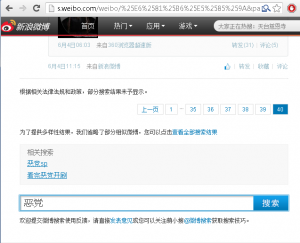
The China Chats keyword list was tested on Sina Weibo four times from Jun to Aug 2013. The data allows us to identify changes in censorship on Sina Weibo over time.
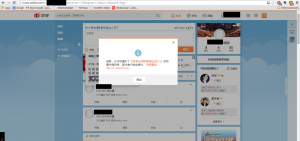
Working with the just-released China Chats keyword list, Jason Q. Ng extended The Citizen Lab/UNM’s analysis by checking whether each of the 4,256 keywords was blocked from searching on Sina Weibo. This report includes further analysis and examination of other potential censorship tactics by Weibo revealed in the data.
In April 2010, China Telecom’s network announced incorrect paths to 50,000 IP prefixes, referred to as a “hijack”. The politically sensitive nature of some of the IP prefixes that were hijacked brought this incident to the attention of the US government. It raises many important questions about how we characterize and reason about large-scale routing incidents when they occur.
Citizen Lab and Canada Centre for Global Security Studies Visiting Research Fellow in International Broadcasting Karl Kathuria wrote an article discussing the issues facing broadcasters online.