Report
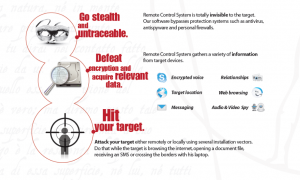
In this report, we identified three instances where Ethiopian journalist group ESAT was targeted with spyware in the space of two hours by a single attacker. In each case the spyware appeared to be RCS (Remote Control System), programmed and sold exclusively to governments by Milan-based Hacking Team.
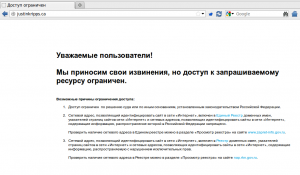
A closer analysis and verification of the reported blocking of Canadian Olympic Bobsledder Justin Kripps website on Russia’s Rostelecom network.
In this report, Citizen Lab researchers Morgan Marquis-Boire and John Scott-Railton and EFF Global Policy Analyst Eva Galperin outline how pro-government attackers have targeted the Syrian opposition, as well as NGO workers and journalists, with social engineering and “Remote Access Tools” (RAT)

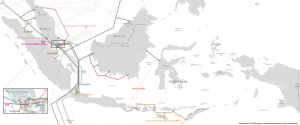
This report, Islands of Control, Islands of Resistance: Monitoring the 2013 Indonesian IGF, is the first in a series of Citizen Lab reports that apply a mixture of methods, from technical interrogation to field research and social and legal analyses, to study information controls in and around particular events. This report focuses on information controls in and around Indonesia’s hosting of the United Nations Internet Governance Forum (IGF).

This post presents a 22-month infographic overview of how events are correlated with blocking of information related to Bo Xilai on Sina Weibo.

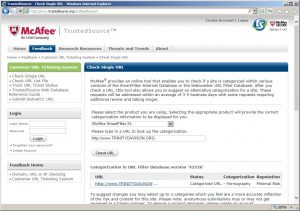
What do the Trinity Davison Lutheran Church, the Filipino American Women’s Network, the Tucson Jazz Institute, the Sacramento Police Activities League, the Pan Iranist Party of Iran, and the Salvation Army of Houston, Texas have in common?
Their websites are all blocked for Internet users in Saudi Arabia, and for most Internet users in the United Arab Emirates
This post is an introduction to Asia Chats, a research project analyzing information controls and privacy in mobile messaging applications used in Asia. The project will produce a series of reports that will begin with a focus on WeChat, LINE, and KakaoTalk. Reports will include analysis based on our technical investigation of censorship or surveillance functionality, assessment of privacy issues surrounding these applications’ use and storage of user data, and comparison of the terms of service and privacy policies of the applications.
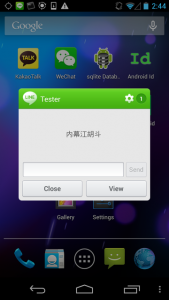
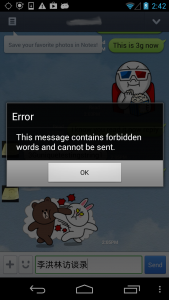
This report by Seth Hardy (Senior Security Analyst, Citizen Lab) describes the technical details of client-side censorship functionality in the LINE messenger client for Android, and a method for disabling it.
This post is the first in a series of research reports analyzing information controls and privacy in mobile messaging applications used in Asia. An introduction to the project can be found here
This post analyzes the multistakeholder participation in the 2013 IGF in Indonesia, which has been lauded as a model for how different stakeholder groups can operate at these events, and discusses developments in the country’s Internet governance agenda.
This blog post seeks to map out the infrastructure and governance of ICTs in the country, and explores the trends and challenges regarding the right to freedom of expression and access to information, that is grounded in the universal human rights framework.
An Indonesian translation of this post is available here.
Terjemahan dalam bahasa Indonesia dari halaman ini tersedia disini.