Publications
In this research note, we analyze a malware campaign targeting Hong Kong democracy activists. Two new malware families are used in the campaign that we name UP007 and SLServer. Previous reports have shown overlap in the tactics, tools, and procedures used in this campaign in other operations targeting groups in Burma, Hong Kong, and the Tibetan community.
This report describes the latest iteration in a long-running espionage campaign against the Tibetan community. We describe how the attackers continuously adapt their campaigns to their targets, shifting tactics from document-based malware to conventional phishing
A second audit of South Korea’s Smart Sheriff application reveals that there are numerous unresolved vulnerabilities that put minor children and parental users of the application at serious risk.
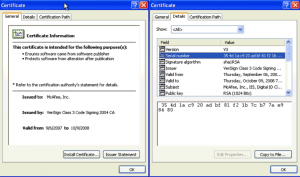
This report analyzes a campaign of targeted attacks against an NGO working on environmental issues in Southeast Asia. Our analysis reveals connections between these attacks, recent strategic web compromises against Burmese government websites, and previous campaigns targeting groups in the Tibetan community.
This report describes the results of two independent security audits of Smart Sheriff, one by researchers who collaborated at the 2015 Citizen Lab Summer Institute (held at the Munk School of Global Affairs, University of Toronto), and the other by the auditing firm Cure53. The combined audits identified twenty-six security vulnerabilities in recent versions of Smart Sheriff (versions 1.7.5 and under). These vulnerabilities could be leveraged by a malicious actor to take control of nearly all Smart Sheriff accounts and disrupt service operations.