Publications
This post analyzes targeted malware attacks against groups in the Tibetan diaspora and Hong Kong that leverage the CVE-2014-4114 vulnerability

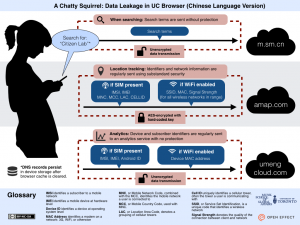
UC Browser is the most popular mobile web browser in China and India, boasting over 500 million users. This report provides a detailed analysis of how UC Browser manages and transmits user data, particularly private data, during its operation. Our research was prompted by revelations in a document leaked by Edward Snowden on which the Canadian Broadcasting Corporation (CBC) was preparing a story.
Hundreds of members of the Tibetan community are being targeted by email-based malware attacks that leverage the March 10 Tibetan Uprising anniversary as a theme. This report analyzes two March 10 related attacks. One using a new malware family we call MsAttacker , and another using the ShadowNet malware family and command and control infrastructure related to previous campaigns that targeted the Tibetan community.

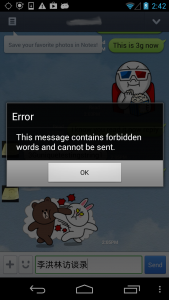
This report is part of a series which analyzes regionally-based keyword censorship in LINE, a mobile messaging application developed by LINE Corporation. The most recent update to the censorship keyword list include a number of new entries as well as the introduction of regular expressions for more advanced keyword matching.
In this post we report updates on how LINE, KakaoTalk, OneDrive and Flickr are being disrupted in China. We find that Flickr and OneDrive remain consistently blocked, but LINE and KakaoTalk show inconsistent fluctuation between accessibility and inaccessibility. We also analyze security and privacy of FireChat and test accessibility of the service in China.