Publications
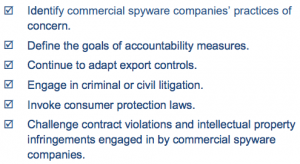
We are releasing a more comprehensive “checklist” consolidating our thoughts on how best to confront the lack of accountability in the commercial spyware trade.
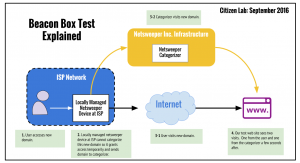
In this report, we confirm the use of the services of Canadian company Netsweeper, Inc. to censor access to the Internet in the Kingdom of Bahrain.
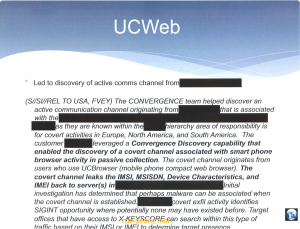
In this report we analyze Windows and Android versions of web browser UC Browser, and find they transmitted personally identifiable information with easily decryptable encryption and were vulnerable to arbitrary code execution during software updates.
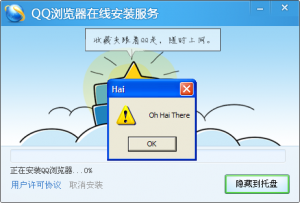
This report describes privacy and security issues with the Windows and Android versions of QQ Browser. Our research shows that both versions of the application transmit personally identifiable data without encryption or with easily decrypted encryption, and do not adequately protect the software update process.
This report provides a detailed, mixed methods analysis of Information controls related to the Yemen armed conflict, with research commencing at the end of 2014 and continuing through October 20, 2015. The research confirms that Internet filtering products sold by the Canadian company Netsweeper have been installed on and are presently in operation in the state-owned and operated ISP YemenNet, the most utilized ISP in the country.