Asia Pacific
In this report we analyze Windows and Android versions of web browser UC Browser, and find they transmitted personally identifiable information with easily decryptable encryption and were vulnerable to arbitrary code execution during software updates.
Citizen Lab Director Ron Deibert authored an op-ed for CBC News detailing the newly revamped Access My Info tool, which now includes fitness trackers and dating applications. The tool allows Canadians to exercise their right to inquire about the information that technology companies store about them.
Citizen Lab’s Cyber Stewards Network Partner ICT Watch is one of the winners of the 2016 WSIS Champion Projects Award, for their project titled ‘Internet Sehat’ (Internet Healthy) Toward Indonesian Information Society.
Access My Info (AMI), a web tool used to submit disclosure requests to telecommunications providers on the data they collect and share with third parties about their customers, launched in Hong Kong.
Citizen Lab’s Cyber Stewards Network Partner ICT Watch is one of the winners of the 2016 WSIS Champion Projects Award, for their project titled ‘Internet Sehat’ (Internet Healthy) Toward Indonesian Information Society.
In this research note, we analyze a malware campaign targeting Hong Kong democracy activists. Two new malware families are used in the campaign that we name UP007 and SLServer. Previous reports have shown overlap in the tactics, tools, and procedures used in this campaign in other operations targeting groups in Burma, Hong Kong, and the Tibetan community.
This report describes privacy and security issues with the Windows and Android versions of QQ Browser. Our research shows that both versions of the application transmit personally identifiable data without encryption or with easily decrypted encryption, and do not adequately protect the software update process.
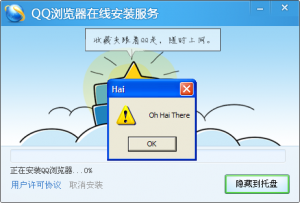
A new report from the University of Toronto’s Citizen Lab identifies security and privacy issues in QQ Browser, a mobile browser produced by China-based Internet giant Tencent, which may put many millions of users of the application at risk of serious compromise.
This report describes the latest iteration in a long-running espionage campaign against the Tibetan community. We describe how the attackers continuously adapt their campaigns to their targets, shifting tactics from document-based malware to conventional phishing

A new report from the Citizen Lab reveals that Baidu Browser, a popular mobile browser based in China and used by millions of people, has numerous privacy and security issues that could put users’ communications at risk.