Asia Pacific
Citizen Lab Communications Officer Irene Poetranto authored an op-ed in The Jakarta Post on 14 December. In Time for greater transparency, Poetranto writes about the recent spying allegations by the Australian spy agency and the market for surveillance technologies.
This post presents a 22-month infographic overview of how events are correlated with blocking of information related to Bo Xilai on Sina Weibo.

This post is an update to our report on regionally-based keyword censorship in the popular chat application LINE. It covers responses from LINE Corporation to questions around censorship functionality in the application and recent changes to how keyword censorship and traffic encryption operate in the latest versions of LINE.

Citizen Lab Doctoral Fellow Jennie Phillips attended the “Regional Consultation on Freedom of Expression for Civil Liberties” conference on 21-23 November in Bangkok, Thailand. A total of 137 participants from 26 countries attended the conference, which aimed to spark an Asia-wide movement for the protection of online freedom of expression.
Citizen Lab Research Fellow Jason Q. Ng published a piece in The Atlantic on 27 November. Titled, “How Tech Companies Can Help Overcome Chinese Censorship”, the piece looks at companies facilitating censorship in China.
This post is an introduction to Asia Chats, a research project analyzing information controls and privacy in mobile messaging applications used in Asia. The project will produce a series of reports that will begin with a focus on WeChat, LINE, and KakaoTalk. Reports will include analysis based on our technical investigation of censorship or surveillance functionality, assessment of privacy issues surrounding these applications’ use and storage of user data, and comparison of the terms of service and privacy policies of the applications.

This report by Seth Hardy (Senior Security Analyst, Citizen Lab) describes the technical details of client-side censorship functionality in the LINE messenger client for Android, and a method for disabling it.
This post is the first in a series of research reports analyzing information controls and privacy in mobile messaging applications used in Asia. An introduction to the project can be found here

This post analyzes the multistakeholder participation in the 2013 IGF in Indonesia, which has been lauded as a model for how different stakeholder groups can operate at these events, and discusses developments in the country’s Internet governance agenda.

This blog post seeks to map out the infrastructure and governance of ICTs in the country, and explores the trends and challenges regarding the right to freedom of expression and access to information, that is grounded in the universal human rights framework.
An Indonesian translation of this post is available here.
Terjemahan dalam bahasa Indonesia dari halaman ini tersedia disini.
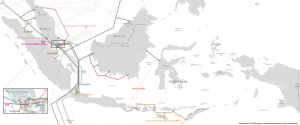
Building on past network measurements, legal, and policy analyses undertaken by the OpenNet Initiative, we set out to apply a mixed-methods approach to better understand the current situation in Indonesia. Our analysis is set in the context not only of the 2013 IGF, but amidst increasingly intense debates about free expression and access to information, and rapid technological change and development.