Asia Pacific
The China Chats keyword list was tested on Sina Weibo four times from Jun to Aug 2013. The data allows us to identify changes in censorship on Sina Weibo over time.
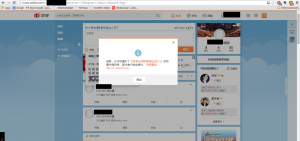
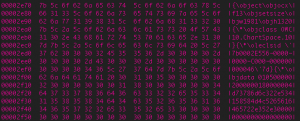
In this post, we report on “Surtr”, a malware family that has been used in targeted malware campaigns against the Tibetan community since November 2012
Working with the just-released China Chats keyword list, Jason Q. Ng extended The Citizen Lab/UNM’s analysis by checking whether each of the 4,256 keywords was blocked from searching on Sina Weibo. This report includes further analysis and examination of other potential censorship tactics by Weibo revealed in the data.
In this collaborative study between the Citizen Lab and Department of Computer Science at the University of New Mexico we examine the implementation of censorship and surveillance in two IM clients maintained by two different Chinese companies. For a period of more than a year and a half, we downloaded and decrypted the censorship and surveillance keyword lists used by the client software of two IM programs used in China: TOM-Skype and Sina UC.
In this Tea Leaf Nation article, Citizen Lab Google Policy Fellow Jason Q. Ng examines the recent changes to censorship on Sina Weibo.
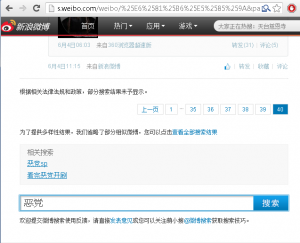
As citizens in China commemorate the twenty-fourth anniversary of June 4th today, we identified 71 keywords that are currently blocked from searching on Sina Weibo.

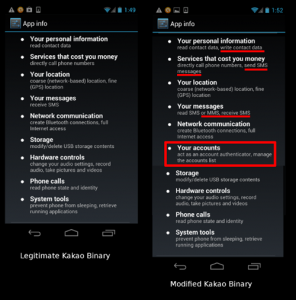
This blog post reports on a malware attack in which a compromised version of Kakao Talk, an Android-based mobile messaging client, was sent in a highly-targeted email to a prominent individual in the Tibetan community. The malware is designed to send a user’s contacts, SMS message history, and cellular network location to attackers. This post was updated on 18 April 2013.
In a piece for Agence France Press, Citizen Lab Senior Researcher Sarah McKune was quoted in response to a recent report outlying alleged Chinese hacking of US firms.
Professor Deibert spoke about the Canadian company Blackberry and the lack of transparency in Blackberry’s agreements with governments abroad.
In April 2010, China Telecom’s network announced incorrect paths to 50,000 IP prefixes, referred to as a “hijack”. The politically sensitive nature of some of the IP prefixes that were hijacked brought this incident to the attention of the US government. It raises many important questions about how we characterize and reason about large-scale routing incidents when they occur.