Asia Pacific
Google Policy Fellow Kieran Bergmann published an article for the Asia Pacific Memo. Bergmann’s article looked at Thailand’s lese majeste cases and the government’s method of controlling cyberspace.
After years spent as one of the world’s most strictly controlled information environments, the government of Burma has recently begun to open up access to previously censored online content. Recent OpenNet Initiative testing has confirmed these changes, finding a variety of opposition websites, critical blogs and foreign news sites to be accessible after years of blocking. This ONI blog post discusses recent developments in Burma and reports on the results of testing conducted in Burma in August 2012.

Online freedom of expression continues to be threatened in Vietnam, as recently proposed regulations and the ongoing detainment and harassment of bloggers combine with an already strict regime of Internet filtering to further restrict information openness. This OpenNet Initiative blog post describes these new developments and reports on the results of testing conducted in Vietnam from April to August 2012.

2012 Google Policy Fellow Kieran Bergmann wrote an article titled Outsourcing Censorship for the Canadian International Council on how governments in Asia are increasing their efforts to control online content.
OpenNet Initiative research has documented that web filtering applied by India-based ISPs is also filtering content for customers of an ISP in Oman. This “upstream filtering” is restricting access to news sites, political blogs and file sharing sites for customer’s of Omantel, who have limited opportunities for recourse. Combined with the significant filtering implemented by Omantel itself, this essentially puts users in Oman behind multiple layers of national-level filtering.
This post is the first in a series of analyses that the Citizen Lab is preparing regarding the urgent and ongoing threat presented by information operations deployed against Tibetans and others who advocate for Tibetan rights and freedoms, including in Tibetan areas of China.
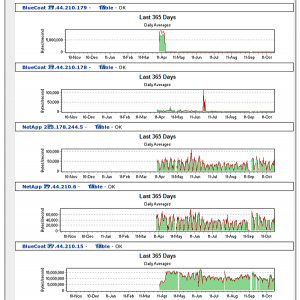
Additional evidence gathered by the Citizen Lab from Burma since the publication of Behind Blue Coat has provided further confirmation that Blue Coat’s devices are presently in use in the country.
Although Blue Coat has recently acknowledged the presence of their devices in Syria, this brief contributes to previous findings of devices in the country, documents additional devices in use in Syria, and identifies Blue Coat devices actively in use in Burma.
The Canadian International Council (CIC) interviewed Mr. Jon Penney, a lawyer and Google Policy Fellow at the Citizen Lab, about a report recently released by McAfee, which contains “circumstantial evidence” pointing to the Chinese government involvement in what it claimed to be the largest series of cyber-attacks to date.
In this article, the Globe and Mail reports on the existence of a foreign entity that has been trying to steal data from more than 70 organizations including two Canadian government departments and the World Anti-Doping Agency in Montreal. The series of incidents were reported by McAfee, which claims to have access to log files from a command and control server used in the attacks. “Operation Shady Rat,” the company’s report on the affair, was released on Wednesday. The attackers have not been identified, however, some commentators are directing suspicions towards China given that the list of targets includes the United Nations, governments in the West and Southeast Asia, military-defence contractors, and international sports bodies that were hit around the time of the 2008 Beijing Olympics.