Asia Pacific
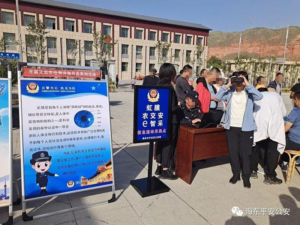
Police led mass iris scan collection in Qinghai, a region with a population that is 49.4% non-Han, including Tibetans and Hui Muslims. Iris scan collection is part of long-standing police intelligence gathering programs. Through this data collection, Qinghai’s police are effectively treating entire communities as populated by potential threats to social stability.
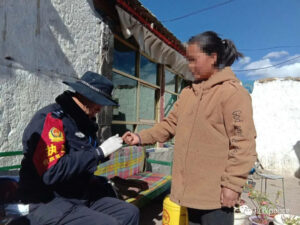
We find that mass DNA collection in Tibet is another mass DNA collection campaign conducted under the Xi Jinping administration (2012–present), along with the mass DNA collection campaign in the Xinjiang Uyghur Autonomous Region and the police-led national program of male DNA collection.
Our investigation uncovered an extensive Pegasus hacking operation against pro-democracy campaigners in Thailand. At least 30 forensically-confirmed victims of NSO Group’s Pegasus spyware between October 2020 and November 2021.

We consistently found that Bing censors politically sensitive Chinese names over time, that their censorship spans multiple Chinese political topics, consists of at least two languages—English and Chinese—and applies to different world regions, including China, the United States, and Canada.

Since our report in August 2021, we find that Apple has eliminated their Chinese political censorship in Taiwan. However, Apple continues to perform broad, keyword-based political censorship outside of mainland China in Hong Kong, despite human rights groups’ recommendations for American companies to resist blocking content.

Citizen Lab researchers find several encryption vulnerabilities on China’s mandatory app for Olympic athletes, MY2022.
MY2022, an app mandated for use by all attendees of the 2022 Olympic Games in Beijing, has a simple but devastating flaw where encryption protecting users’ voice audio and file transfers can be trivially sidestepped. Health customs forms which transmit passport details, demographic information, and medical and travel history are also vulnerable. Server responses can also be spoofed, allowing an attacker to display fake instructions to users.

China’s sophisticated filtering system, known as the Great Firewall (GFW), is the region’s biggest impediment to the freedom of information. The GFW is built by the Chinese government and is continuously developed to serve their political interests. In this report, we introduce the design of GFWatch, a large-scale longitudinal measurement platform that informs the public about how GFW censorship changes over time and its negative impact on the free flow of information.

The Hong Kong police recently forced one of the city’s most prominent activist groups to delete its online presence, in a move some fear means that Hong Kong’s digital spaces will move to more closely resemble the mainland.
Senior researcher, Irene Poetranto, discusses a joint report written by the Citizen Lab, OutRight Action International, and the Open Observatory of Network Interference (OONI), focused on LGBTIQ website censorship and its impact on LGBTIQ communities.