Asia Pacific
This report demonstrates the technical underpinnings of how WeChat image censorship operates and suggests possible evasion strategies.
Investigation of a malware campaign targeting the Tibetan community and discussion of the challenges in analyzing closed espionage ecosystems.

In this section, we spotlight several countries where we have evidence of public ISPs blocking websites using Netsweeper’s products. Each country has significant human rights, public policy, insecurity, or corruption challenges, and/or a history of using Internet censorship to prevent access to content that is protected under international human rights frameworks.
South Korea requires minors to have content filtering apps installed on their phones. A security audit of two child monitoring apps published by major Korean telecoms —KT Olleh Kidsafe and Clean Mobile Plus—finds serious security and privacy issues that put children at risk.

The 19th National Communist Party Congress was held from October 18-24, 2017. WeChat, China’s most popular chat app, blocked a broad range of content related to the Congress.

As parents all over the world review back-to-school safety tips with their kids, researchers have revealed serious security vulnerabilities in South Korean children’s apps that may leave some parents asking: are our kids safer without them?

South Korea requires minors to have content filtering apps installed on their phones. A security audit of two child monitoring apps—Cyber Security Zone and Smart Dream—finds serious security and privacy issues that put children at risk.

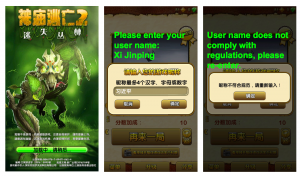
In a recent paper presented at FOCI, Citizen Lab researchers investigate the nature of keyword filtering in Chinese mobile games, supporting a decentralized framework of censorship.
WeChat and Sina Weibo adapted and evolved their censorship efforts in response to the death of Liu Xiaobo.

This report reveals a campaign of reconnaissance, phishing, and malware operations that use content and domains made to mimic Chinese language news websites.