Our network security analysis of the popular social media app, RedNote, revealed a number of issues with both the Android and iOS versions of the app.

Meron is Swedish-Eritrean. She lives in East Africa where she advocates for Eritrean refugees. Ever since becoming an activist, she has been attacked by trolls who she believes are organized by the Eritrean government.

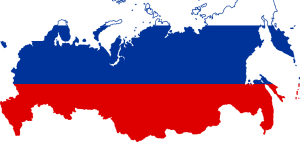
Prior to 2022, Russian transnational repression was characterized by the killing and attempted killing of former regime insiders, high-profile dissidents and members of armed groups previously engaged in conflict with Russia, especially from Chechnya. However, the full-scale war against Ukraine changed not only the composition of the exile community but also the scale and scope of Russian repression across borders.
The Turkish government is a prolific perpetrator of transnational repression. In Freedom House’s dataset of physical incidents of transnational repression, Turkey currently ranks second after China among all countries engaging in repression against exiles and diaspora communities.

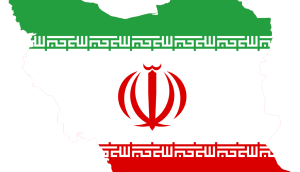
Iran is a persistent perpetrator of transnational repression using a broad range of methods. In 1992, for example, Iranian regime agents killed key members of the Iranian-Kurdish opposition in a Berlin restaurant. More recent assassinations targeted opponents in the Netherlands and Turkey while further attempts in Denmark and France were disrupted by the authorities. Iranian security agencies have also kidnapped exiles traveling through neighboring countries and forcibly returned them to Iran.
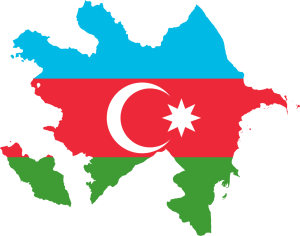
The Azerbaijani government has systematically eliminated forums for civil society and political opposition, stifling all critical debate. Civic and political activists, journalists, academics, lawyers and many others have been subjected to arrests, legal prosecution, and other forms of relentless state repression. Government critics abroad have not been spared. The authorities rely on transnational repression methods, ranging from digital surveillance to assassinations, to silence dissent beyond its borders.
The Eritrean government has a long history of controlling its nationals abroad and using them for keeping the regime in power. Eritrea’s diaspora has grown through different waves of emigration during the three-decade-long armed struggle for independence and the war against Ethiopia. This exodus has also been triggered by the introduction of the open-ended mandatory national service in 2002 under the increasingly autocratic rule of President Isaias Afewerki and the People’s Front for Democracy and Justice (PFDJ).

Since 2014, the Chinese government has escalated its repression against Uyghurs and other Turkic ethnic minorities in the Xinjiang region in northwestern China. The entire region has been subjected to a comprehensive system of mass surveillance, mobility controls, arbitrary detention, forced labor, and forced sterilizations. China’s efforts extend also across borders as its authorities engage in a widespread campaign of transnational repression that targets individuals both on the basis of their ethnic identity and their activities.
Our analysis of spyware covertly implanted on a phone returned to a Russian programmer after he was released from custody, finds that the spyware placed on his device allows the operator to track a target device’s location, record phone calls, keystrokes, and read messages from encrypted messaging apps, among other capabilities.

We analyze the system Amazon deploys on the US “amazon.com” storefront to restrict shipments of certain products to specific regions. We found 17,050 products that Amazon restricted from being shipped to at least one world region. – While many of the shipping restrictions are related to regulations involving WiFi, car seats, and other heavily regulated product categories, the most common product category restricted by Amazon in our study was books.