Publications
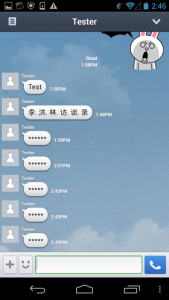
In this post we report updates on how LINE, KakaoTalk, OneDrive and Flickr are being disrupted in China. We find that Flickr and OneDrive remain consistently blocked, but LINE and KakaoTalk show inconsistent fluctuation between accessibility and inaccessibility. We also analyze security and privacy of FireChat and test accessibility of the service in China.

In this post we examine how the Great Firewall of China is implementing DNS tampering and HTTP request filtering on KakaoTalk and LINE domains, which is disrupting service of the applications as a result. We find that Flickr and OneDrive are also blocked through DNS tampering. We also analyze recent changes to the LINE keyword filtering list.
Background & Key Findings The May 2014 coup d’etat in Thailand was the 19th coup attempt in the country’s history. It stands out from previous coups due to the military junta’s focus on information controls (defined below in more detail). It was also the first time that martial law was imposed before the coup, allowing […]

In this report, we document the results of network measurement tests we ran to determine how the Internet is being filtered in Iraq in reaction to ongoing insurgency in the country. The results identify 20 unique URLs that are blocked on three Iraq-based Internet Service Providers. Notably, none of the 7 websites we tested that are affiliated with, or supportive, of the jihadist insurgent group the Islamic State in Iraq and Greater Syria (ISIS) were found to be blocked.
This report is the third in a series which analyzes regionally-based keyword censorship in LINE, a mobile messaging application developed by LINE Corporation. We document recent changes to the list of keywords used by LINE to trigger regionally-based keyword filtering for users with accounts registered to Chinese phone numbers.