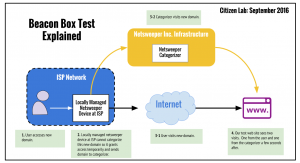
Netsweeper
This comprehensive Toronto Star profile provides an overview of the Citizen Lab’s work, impact, and history, mapping our journey from a initial Ford Foundation grant to an organization with 18 staff and a dozen research fellows.
This call comes on the heels of recent Citizen Lab research which shows that Netsweeper, a Canadian company who has received funding from the Canadian government, is being used by governments to block access to content in ten authoritarian countries around the world, including LGBTQ2+ sites.
The Citizen Lab has sent an open letter to the Ministers of Foreign Affairs of both Canada and Chile, as co-chairs of the Equal Rights Coalition (ERC), and Mr. Randy Boissonnault, Special Advisor to the Prime Minister on LGBTQ2 Issues, flagging important issues for discussion at the upcoming ERC Global Conference on LGBTI Human Rights and Inclusive Development (August 5-7, 2018, in Vancouver, British Columbia, Canada).
In light of Citizen Lab’s recent report which showed that Canadian technology is being used to block LGBTQ2 content in several countries around the world, Citizen Lab director Ron Deibert has penned a letter to MP Randy Boissonnault, Special Advisor to the Prime Minister on LGBTQ2 Issues. Planet Netsweeper revealed that Netsweeper– a company based in Waterloo, […]
The report reveals that the Canadian company’s web filtering products are being used in 30 countries around the world, including 10 where human rights concerns are acute.
This report describes our investigation into the global proliferation of Internet filtering systems manufactured by the Canadian company, Netsweeper Inc. After undertaking a mapping of worldwide country installations, we focus in on ten country cases in which we verify that Netsweeper systems are being used to censor the Internet for subscribers of consumer Internet Service Providers, and where human rights and corporate social responsibility questions are acute.
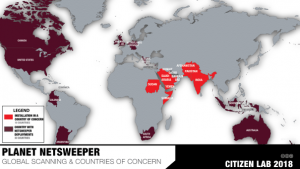
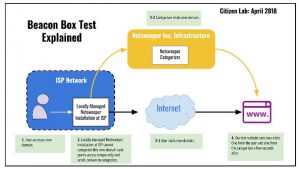
This section details the research questions that informed our study. We also outline in detail the methods that we adopted to identify Netsweeper installations worldwide, and those that we employed to reduce the findings to countries of interest. We also present high-level technical findings and observations.

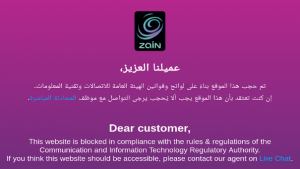
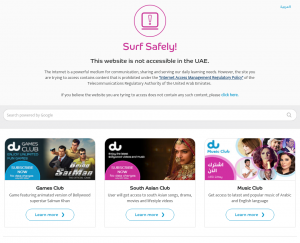
In this section, we spotlight several countries where we have evidence of public ISPs blocking websites using Netsweeper’s products. Each country has significant human rights, public policy, insecurity, or corruption challenges, and/or a history of using Internet censorship to prevent access to content that is protected under international human rights frameworks.
This section examines the legal, regulatory, corporate social responsibility, and other public policy issues raised by our report’s findings. We focus on the responsibilities of Netsweeper, Inc. and the obligations of the Canadian government under international human rights law.
In this report, we confirm the use of the services of Canadian company Netsweeper, Inc. to censor access to the Internet in the Kingdom of Bahrain.