News
The OpenNet Initiative (ONI) is pleased to release In the Name of God: Faith Based Internet Censorship in Majority Muslim Countries. This occasional paper analyzes the Internet censorship policies and practices of majority Muslim countries and finds that in many of these countries online information controls are primarily based on the Islamic faith and interpretations of its instructions

Dr. Rafal Rohozinski, Senior Scholar at the Canada Centre for Global Security Studies and the Citizen Lab, testified before United States Congress on Friday July 15th, 2011 on Internet Freedom in the Organization for Security and Cooperation in Europe (OSCE).
On March 27-28 2011 the Canada Centre for Global Security Studies at the Munk School of Global Affairs and the SecDev Group (Ottawa) convened a public forum entitled Securing the Cyber Commons: a Global Dialogue .
This video presents highlights of the two day event. A full video of the opening plenary and panel will be made available soon. For information on the upcoming 2012 Dialogue and future sponsorship opportunities please contact: [email protected]
Dr. Rafal Rohozinski, Senior Scholar at the Canada Centre for Global Security Studies and the Citizen Lab, will be testifying before United States Congress on Friday July 15th, 2011 on Internet Freedom in the Organization for Security and Cooperation in Europe (OSCE).
For further details see here
In light of the controversy around the use of Canadian-made software being used in the Middle East and North Africa, it is remarkable that the Ontario Centres of Excellence, the Information Technology Association of Canada, and the Canadian Department of Foreign Affairs would choose to honour an Internet Service Provider that pervasively filters access to information using Canadian made software.
See the OpenNet Initiative post here
Recent attacks on three U.S. defense contractors could be tied to cyberespionage campaigns waged from China, several security experts told CNET.
“The reality is, part of the basis of U.S. hegemony…has been the ability to leverage command of signals intelligence to have perspective on the motivations and activities of others. Cyberspace has equalized that, so all of a sudden we’re in a competitive intelligence environment,” said Rafal Rohozinski, a principal at SecDev who did research on targeted attacks on Tibet and others with supposed links to China. Those attacks were detailed in a “GhostNet” report in 2009.
“China has made no secret that they see cyberspace as the domain that allows them to compete with the U.S.,” Rohozinski said.
For full original article, see here
On CBC Dispatches, Rick MacInnes-Rae interviews Ron Deibert, Director of the Citizen Lab in the Munk School of Global Affairs at the University of Toronto, about the way governments in the Middle East are using the internet to fight back against their opponents – and Canada’s role too.
Click here for interview.
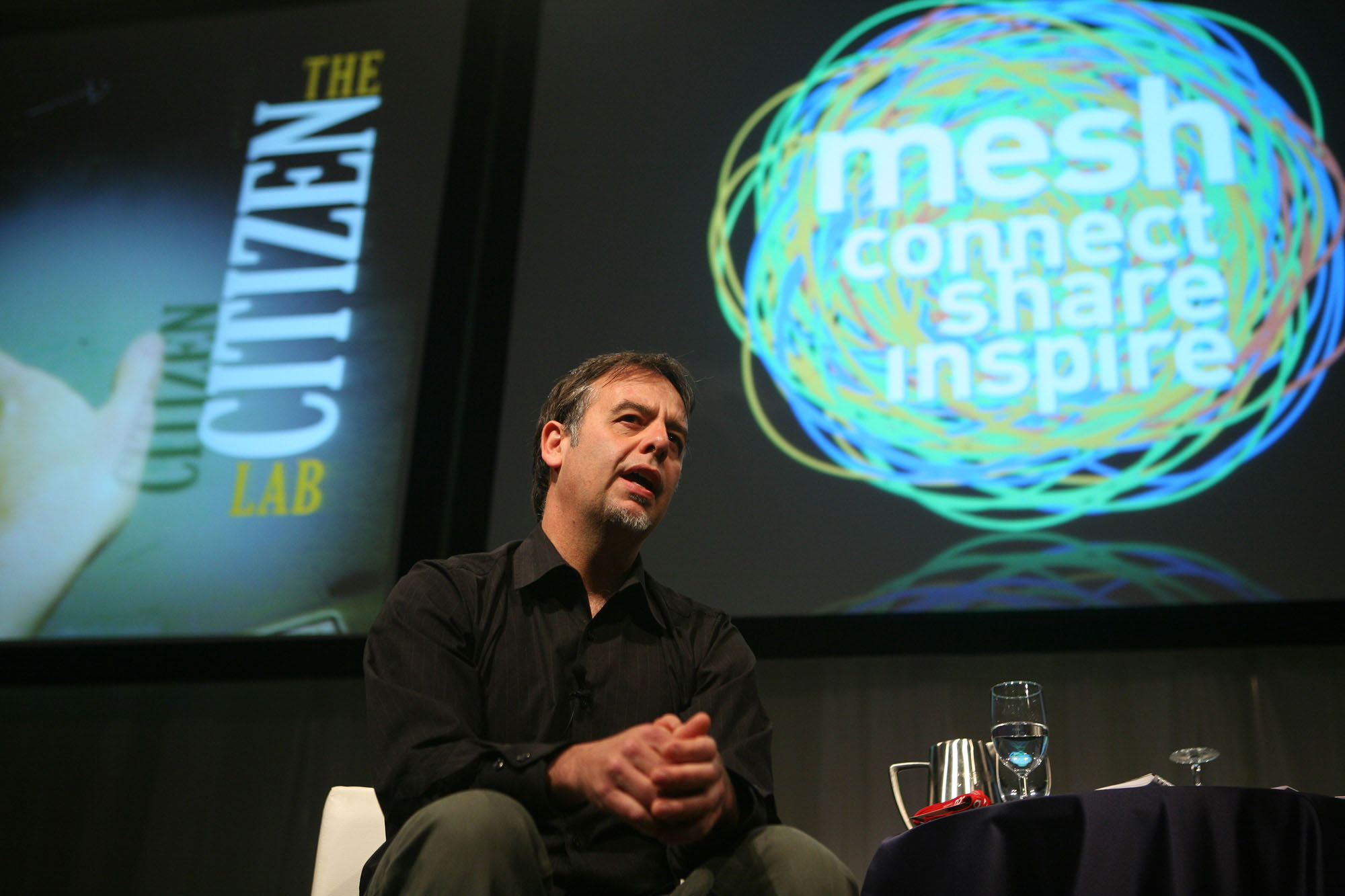
On March 25 Professor Ron Deibert will deliver the keynote for Mesh 2011 Canada’s Web conference. He will discuss state control and surveillance of the internet, and how citizens are responding.
For full details see the Mesh 2011 website
In this article Professor Ron Deibert discusses the active contestation of cyberspace and the need to protect the cyber commons. He calls on liberal democratic governments to form “a common domestic and foreign policy strategy that creates structural conditions to protect and preserve cyberspace as a secure, decentralized, and open commons”.
This article originally appeared in The 2011 G8 Deauville Summit: New World, New Ideas published by the G20 Research Group.
The St. Gallen Symposium is the world’s leading platform for dialogue on key issues in management, the entrepreneurial environment and the interfaces between business, politics and civil society.
This video presents Rafal Rohozinski and Rex Hughes’ panel on cybercrime, as well as a video of an interview with Dr. Hughes entitled “Cybersecurity: A Business with Fear” at the 41st St. Gallen Symposium.