Brief
Following the widely-condemned arrest in July 2025 of prominent Kenyan opposition voice Boniface Mwangi, the Citizen Lab analyzed artefacts from devices seized during the arrest. We found that Cellebrite’s forensic extraction tools were used on his Samsung phone while it was in police custody. This case adds to the concerning pattern of the misuse of Cellebrite technology by government clients.

On April 29, 2025, a select group of iOS users were notified by Apple that they were targeted with advanced spyware. Among the group were two journalists who consented to the technical analysis of their cases. In this report, we discuss key findings from our forensic analyses of their devices.
Exiled and living under constant surveillance, Mariam continues her relentless fight against the Bahraini government’s repression. Her father has been a political prisoner for over a decade, and while she advocates for his release, her activism has made her a high-profile target. Since she left Bahrain under threat of arrest, Mariam has faced state-sponsored digital and physical harassment, even while in exile in Denmark.

Arwa – who spent over a decade in public activism work in Yemen – played a crucial role in the 2011 Yemeni uprising. As a woman activist, her public visibility drew relentless attacks and criticism. The pressure grew exhausting, and, in 2015, she sought refuge in the E.U., hoping for a safer environment to continue her work in a more discreet way.

Meron is Swedish-Eritrean. She lives in East Africa where she advocates for Eritrean refugees. Ever since becoming an activist, she has been attacked by trolls who she believes are organized by the Eritrean government.
Fatima, a Syrian journalist, has been relentlessly harassed, threatened, and blacklisted for her work. She can hardly bear to think about Syria now, let alone continue writing about the never-ending tragedy of the conflict. After years of covering anti-regime groups, freedom of expression, and gender issues, Fatima fled her home country due to the threats she faced. But even in exile in the U.K., the attacks have not stopped. Online and offline harassment continue to haunt her across borders.
Meryem and her family left the Xinjiang region in China for Turkey in the early 1990s, before settling in North America. As a human rights defender, Meryem has experienced various digital threats in response to her activism. She is frequently attacked by what she believes to be Chinese state-backed trolls on X, Facebook, and in the comment section on public Zoom meetings.

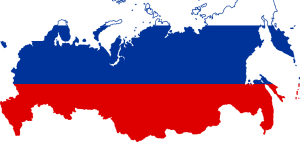
Prior to 2022, Russian transnational repression was characterized by the killing and attempted killing of former regime insiders, high-profile dissidents and members of armed groups previously engaged in conflict with Russia, especially from Chechnya. However, the full-scale war against Ukraine changed not only the composition of the exile community but also the scale and scope of Russian repression across borders.
Meryem and her family left the Xinjiang region in China for Turkey in the early 1990s, before settling in North America. As a human rights defender, Meryem has experienced various digital threats in response to her activism. She is frequently attacked by what she believes to be Chinese state-backed trolls on X, Facebook, and in the comment section on public Zoom meetings.
The Turkish government is a prolific perpetrator of transnational repression. In Freedom House’s dataset of physical incidents of transnational repression, Turkey currently ranks second after China among all countries engaging in repression against exiles and diaspora communities.